Regenerative medicine clinic marketing: selling premium patients years of active life, not treatment
How we repositioned a regenerative medicine clinic in Phuket for international high-net-worth patients: a new site, a patient journey in eight steps and a separate men's health funnel.
Ilia PushinPublished Nov 16, 2026·Updated Nov 16, 2026·7 min read·Also in: Русский
Short answer
Marketing a regenerative medicine clinic to premium patients works when the clinic sells the life outcome the patient wants, not the procedure. We worked with a clinic in Phuket, Thailand, whose patients fly in from around the world: executives of large companies, entrepreneurs, investors and public figures. Its old website was an information page that sold a health screening. We repositioned the clinic around extra years of active life and laid out the whole patient journey, from a free consultation and an airport pickup to the flight home. The site shows lifestyle scenarios instead of treatment rooms and doctors in white coats. Men's health got its own page and funnel with its own tone. Trust rests on three things: the evidence base, experienced doctors and a large partner that supplies the cell material. The project figures are under NDA, but the offers we shaped with the clinic performed well in sales.
Key takeaways
A premium patient buys years of active life (family, career, energy), not relief from a symptom.
The word treatment creates anxiety. Concierge service and a resort setting take it away.
Public figures will not leave testimonials, so trust has to come from doctors, research and partners.
Each audience needs its own funnel: men's health got a separate page with its own voice.
The clinic and its patients
The clinic practices regenerative medicine in Phuket, Thailand: stem cell therapy, peptides and IV treatments, all without surgery.
Its patients fly in from around the world. They are executives of large companies, politicians, entrepreneurs and investors. Most come to restore their health and stay in shape rather than with acute pain. The ticket is high, and they take their time to decide.
In 2024 we refreshed the clinic’s visual identity, built a new website and changed how it sells. The site runs on Framer and was built together with the ZeroGravity team. You can see the test version here.
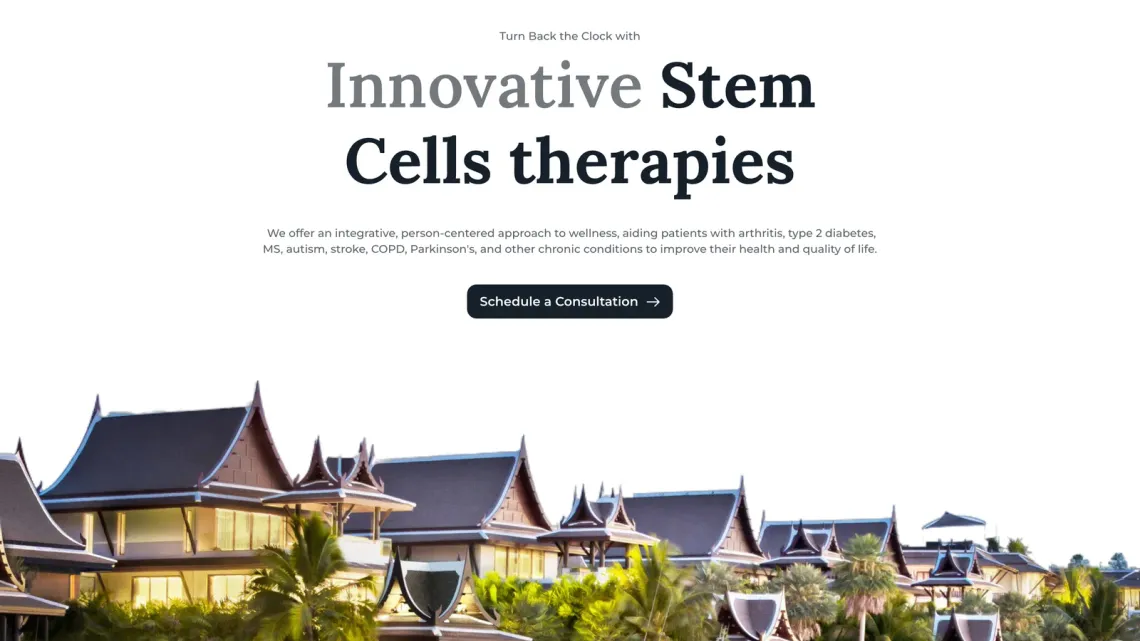
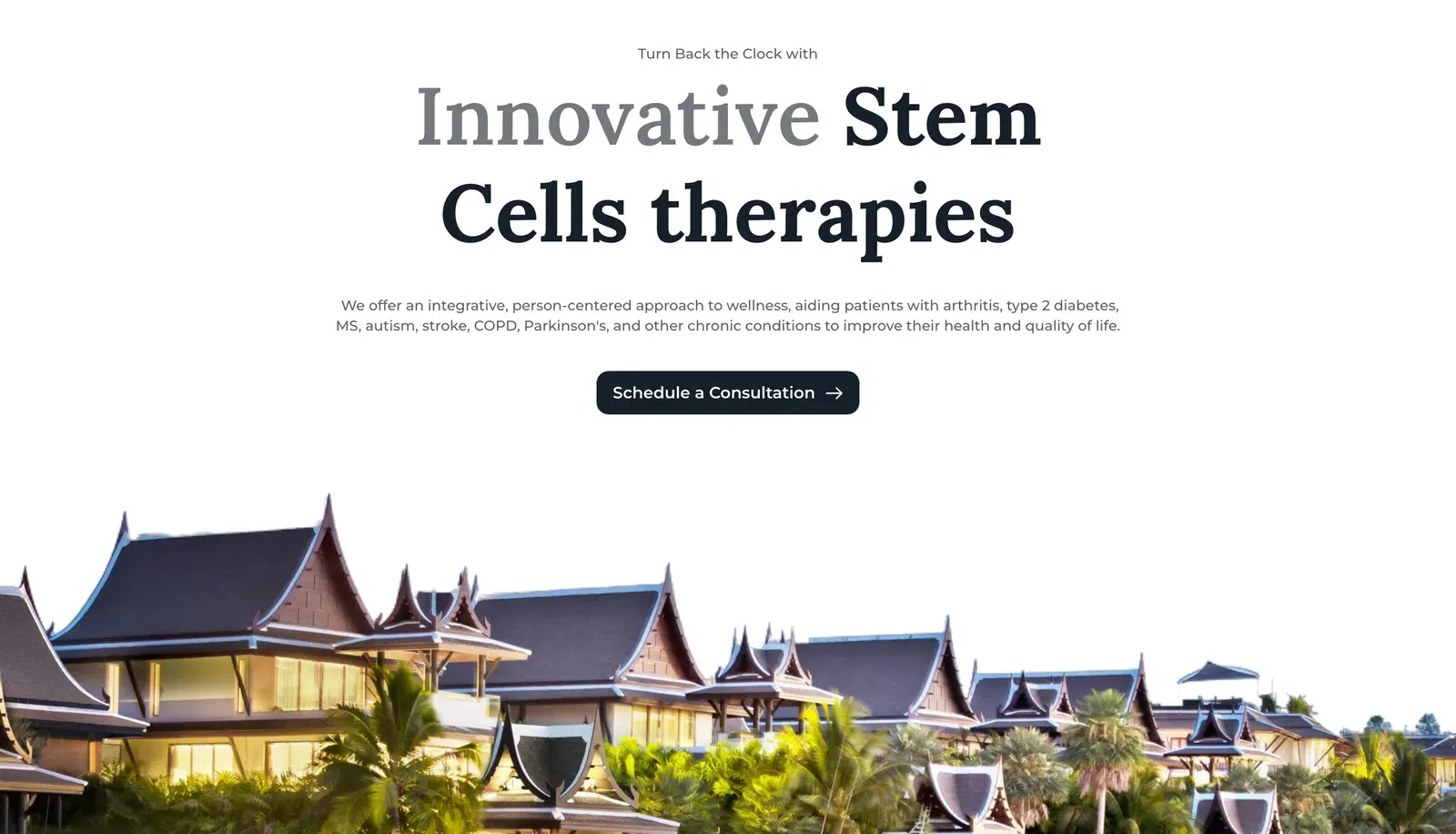
The first screen: one idea, one button and a resort instead of hospital walls.
Why this niche is hard to market
People distrust new methods. When health is at stake, most people choose the treatment they know. Regenerative therapy is offered in only a handful of countries, so there is little existing demand to capture. The clinic has to explain what it does and why before it can sell anything.
Patients want privacy. A professional athlete or a well-known founder will not tell the world they had stem cell therapy. The usual healthcare testimonial, with a face and a name, is almost impossible to get.
The old site sold the wrong thing. It ran on WordPress and worked as a reference page. It described the screening and the methods but never said what the patient would get out of it.
What we changed in the positioning
Sell years of active life, not treatment
Someone paying for an expensive program wants more than relief from knee or back pain. They want to play with their grandchildren, keep winning at work, stay ahead of competitors and keep up the pace. So the clinic’s main promise became an extra 10 to 20 years of active life.
The individual offers grew out of that promise. For athletes and people under heavy workloads, therapy is framed as support for peak performance, not as a repair job.
Take the anxiety out of the journey
The word treatment creates tension on its own. The patient pictures tests, scans and unpleasant procedures, and the stress starts before the flight.
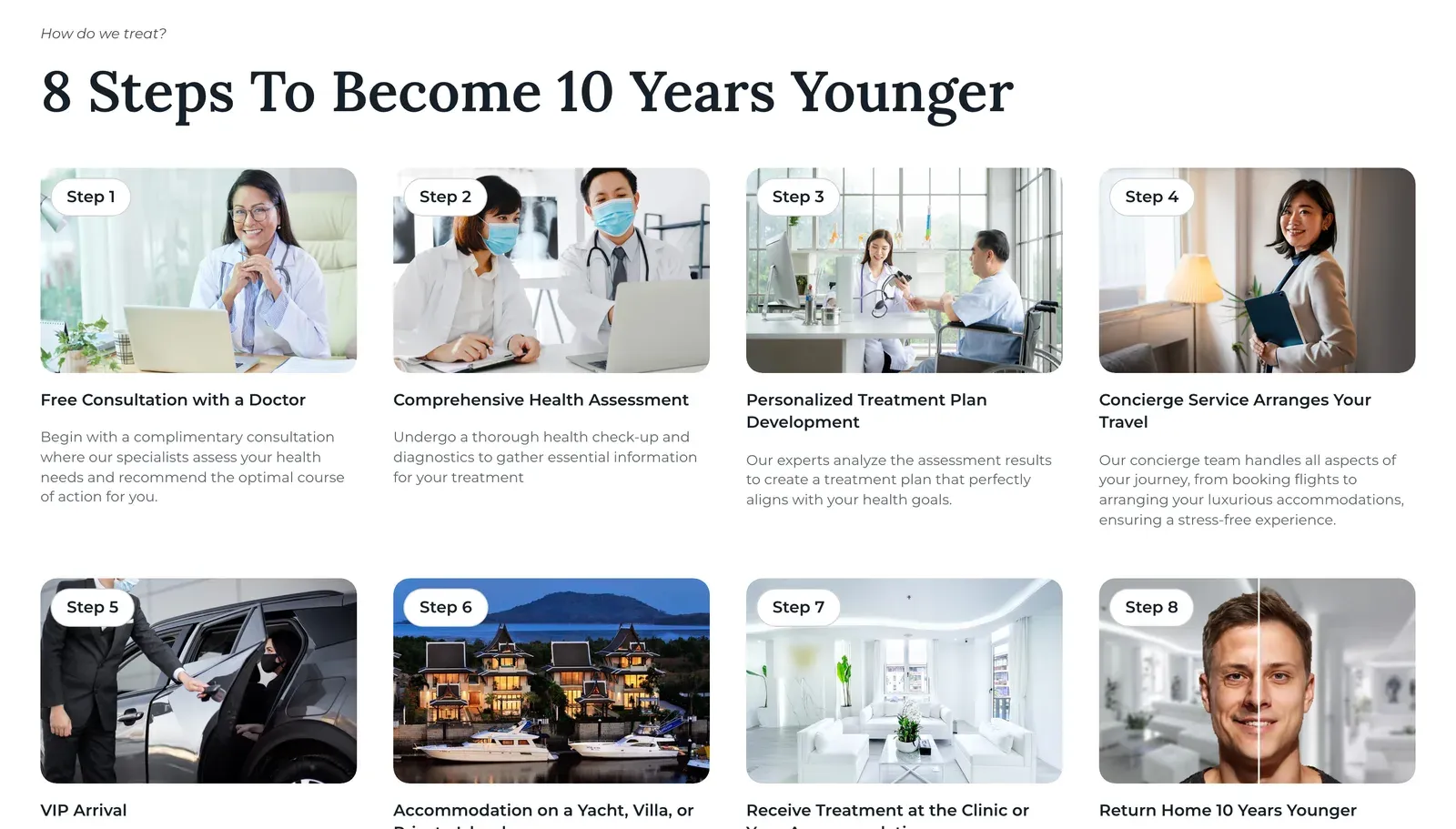
So the site presents therapy as part of a trip. A car meets the patient, a concierge handles flights and accommodation, procedures are injections, and the patient stays in a villa, on a yacht or on a private island. The whole journey is broken into eight clear steps, from a free consultation to the flight home.
The patient journey in eight steps: the patient knows in advance what will happen.
Shoot scenarios, not treatment rooms
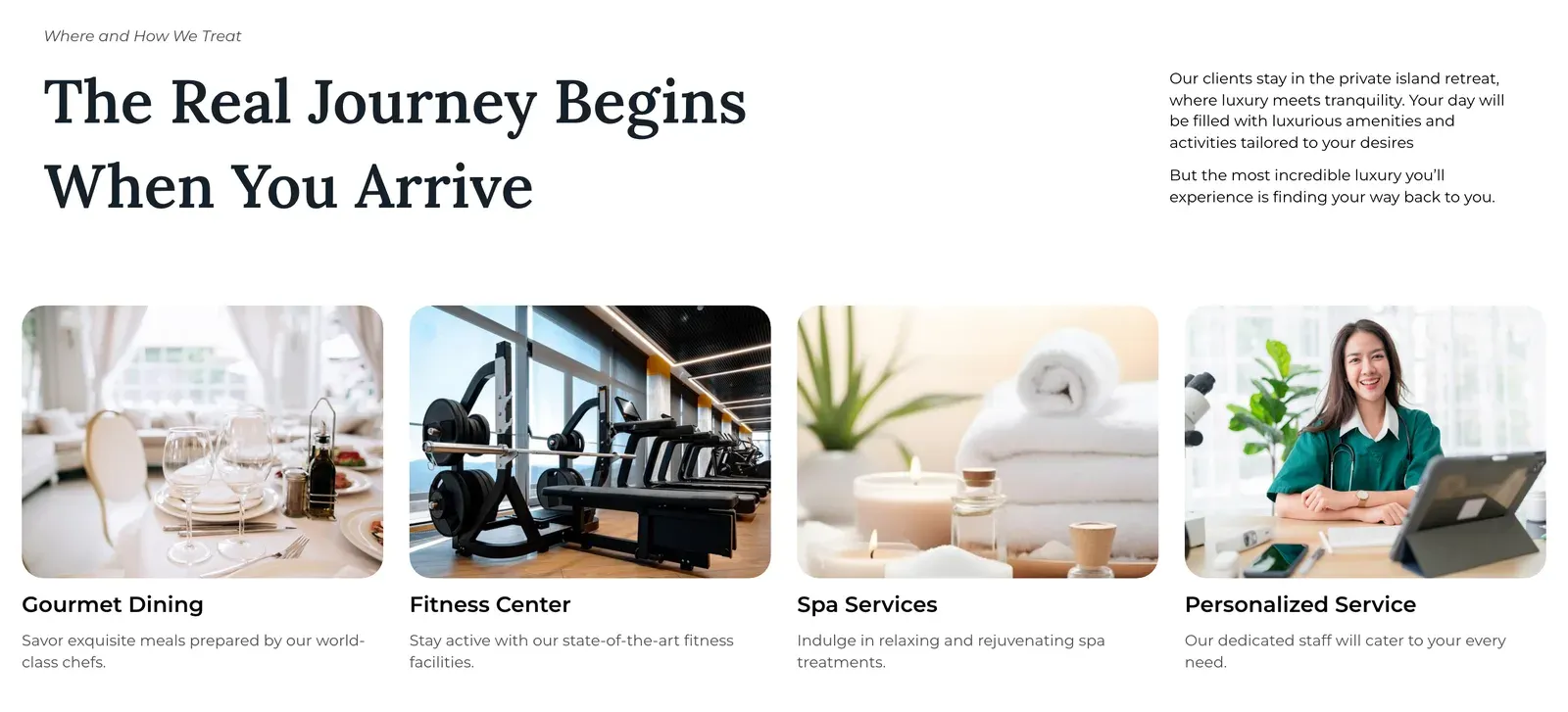
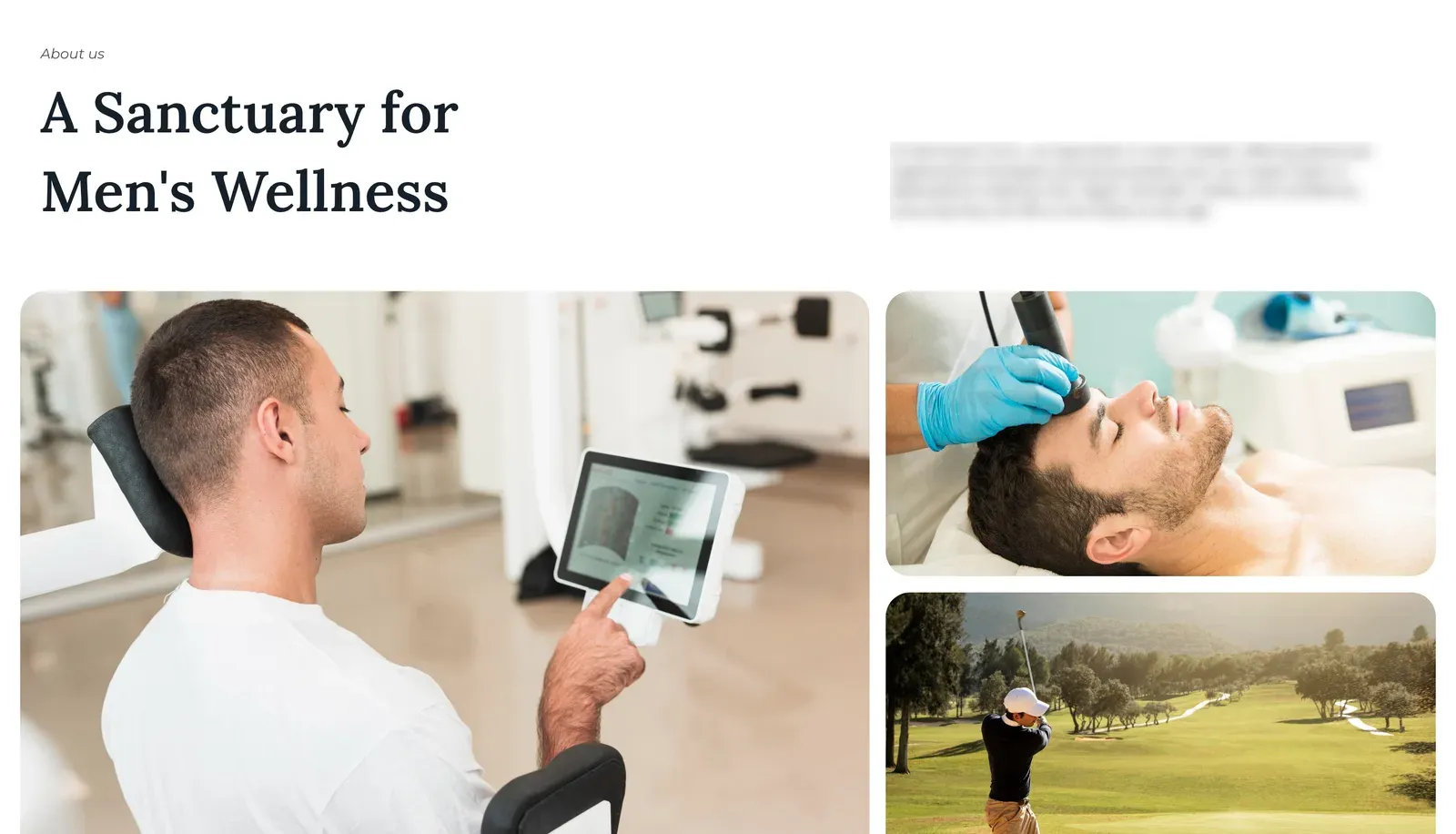
We dropped the standard photos of treatment rooms and doctors in white coats. The site shows staged scenarios instead: dinner, a workout, the spa, personal service. The patient sees what their week on the island will look like, not what the procedure room looks like.
Instead of treatment rooms, the site shows how patients spend their time on the island.
A separate funnel for men’s health
The clinic treats men’s health as its own line: joints, hormone balance, physical performance and prevention. The audience is men who want to stay strong at work and in life.
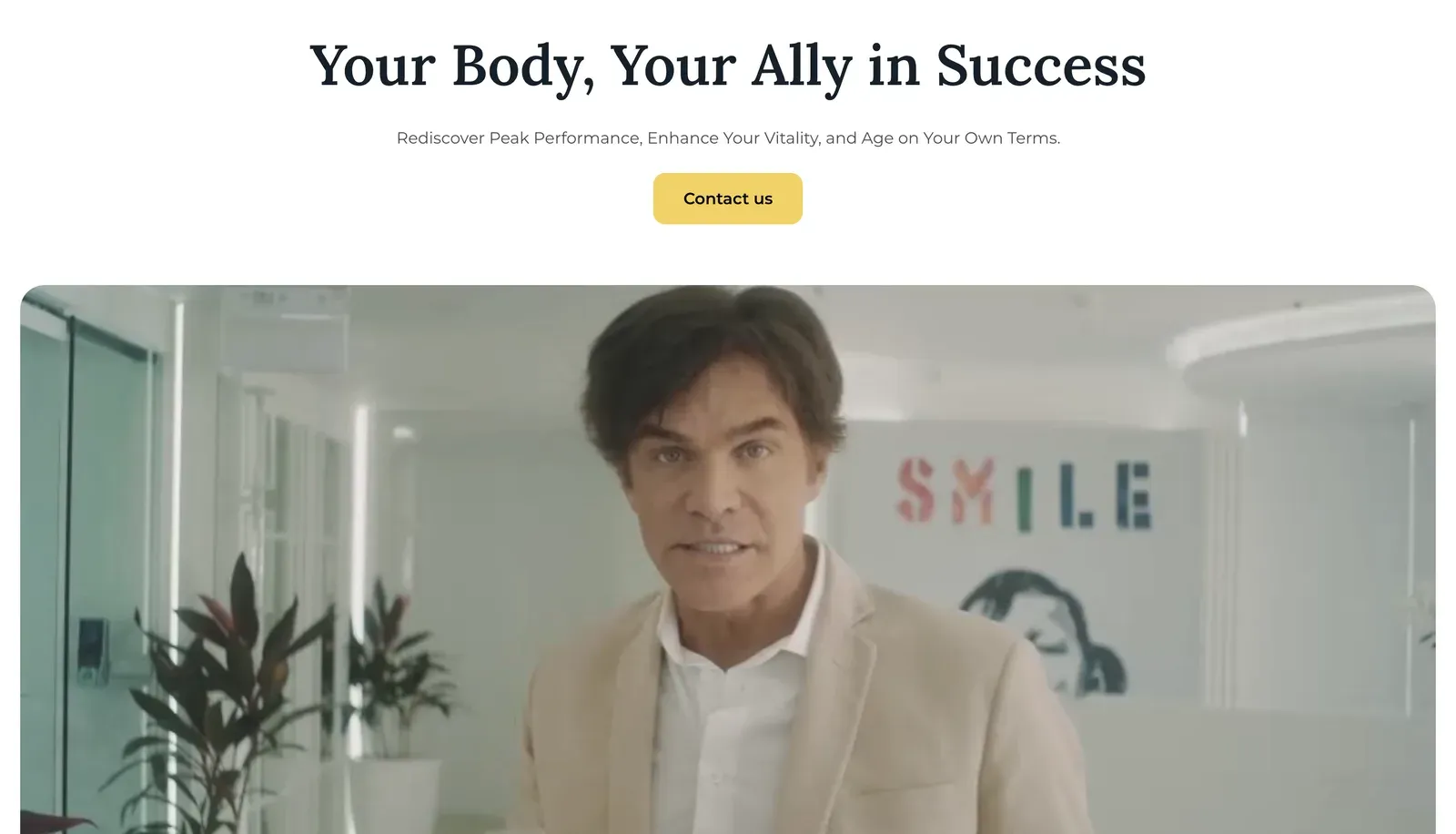
We built them a separate page and a funnel with video. The idea behind the page: this is not a place where you get treated, it is a club for strong men, and you are one of them. Hence the headline “Your Body, Your Ally in Success”, golf and island leisure in the visuals, and a personal plan instead of a price list of procedures.
The men's health page speaks the language of performance and success.
The page visuals: fitness, service and leisure, no hospital setting.
With testimonials off the table, trust comes from three sources:
Evidence. Research and a plain explanation of where the cells come from and why the method is safe.
Doctors. Experienced physicians with a track record, each with a profile on the site.
The partner. A large supplier of cell material that stands behind product quality.
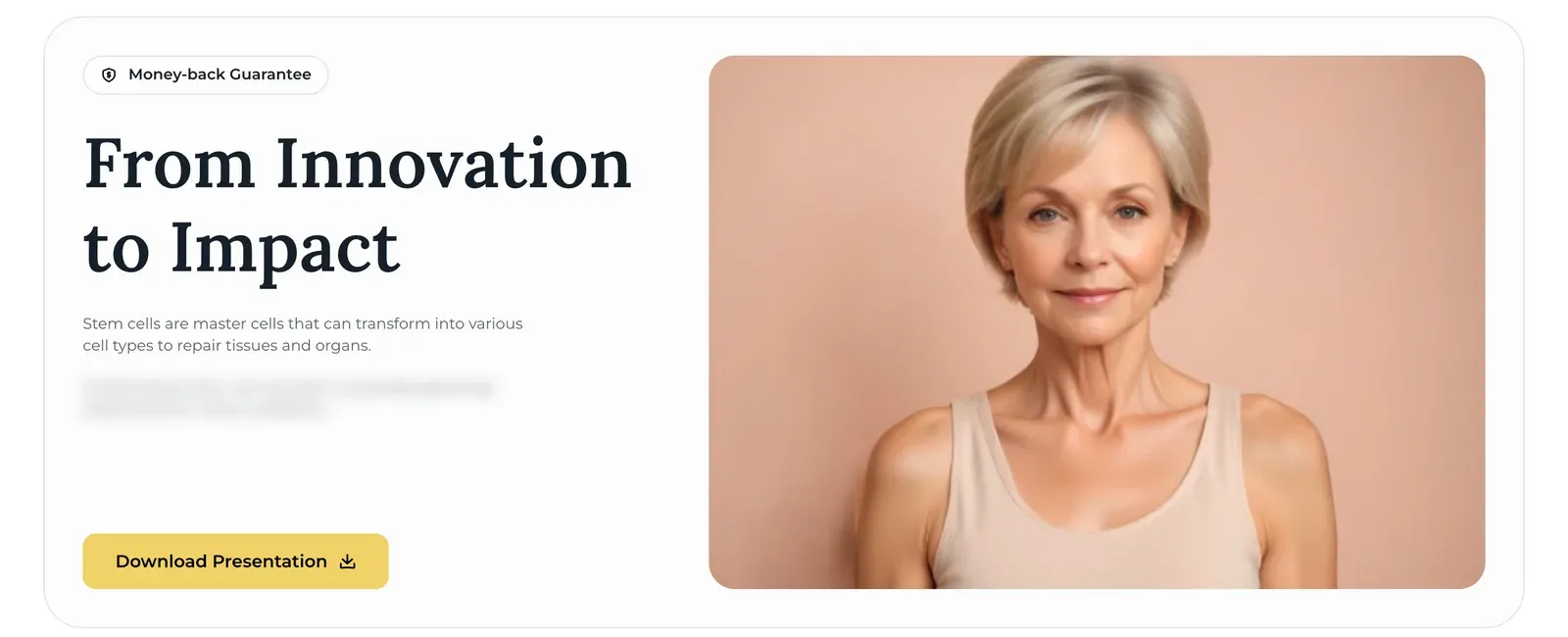
Patients who want to go deeper get a separate page about the product and the research.
The product page: a short take on cell therapy and a presentation for patients who want details.
Results
The project figures are covered by a non-disclosure agreement. What we can say: the offers we shaped together with the clinic performed well in sales.
Practical advice for premium and longevity clinics
Sell the life outcome, not the procedure. Describe what changes for the patient a year from now: work, family, sport. Put the list of methods lower on the page.
Show the whole journey up front. The more expensive the program and the longer the flight, the more the patient needs to see every step: who meets them, where they stay, how many days the procedures take.
Split audiences by goal. Men’s health, recovery from heavy workloads and age prevention each need their own page, voice and ads.
Build trust without patients’ faces. Doctors, research and partners persuade a premium audience more than testimonials it will never give anyway.
About Pushers
Pushers runs marketing operations for healthcare clinics. We take over marketing management, ad channels and contractors, and we set up the advertising ourselves. You can start with a free marketing audit of your clinic: request it on our site.
For how a patient request moves from an ad to a booked visit in a typical clinic, see our piece on healthcare marketing operations.
FAQ
How is regenerative medicine marketing different from marketing a regular clinic?
Demand barely exists yet. Most people stick to conventional treatment and distrust new methods, so the clinic has to explain what the patient gets and remove the fear before it sells a program. The decision cycle is long and the ticket is high.
How do you build trust when patients are public figures?
Most of them will never say publicly that they had stem cell therapy. Trust comes from the doctors' credentials, the research behind the method, the clinic's partners, a clear patient journey and the service itself. Staged lifestyle photography shows the experience without real patients' faces.
Does each program need its own website?
It needs its own page and funnel, not a separate site. A man who wants his performance back needs different language from a patient with a chronic condition.
What limits apply to advertising cell therapy?
Ad platforms and national laws restrict claims about treatment outcomes and targeting based on health topics. Outcome claims on the site have to rest on the clinic's own data and be checked by a lawyer for each market where ads run.
Drafted with AI assistance, edited and fact-checked by the author.
Ilia PushinFounder, PUSHERS & COO Fintech ServiceIlia builds operating systems for growing companies in fintech and healthcare. Since 2021 he has run cross-border payments at ARBI Exchange, a licensed currency exchange in Thailand, including KYC and AML and the move into new jurisdictions.About the authorLinkedIn