Lead magnet
A lead magnet is a free piece of content or a small tool traded for a visitor's contact details, and it only works when the trade is obviously worth it.
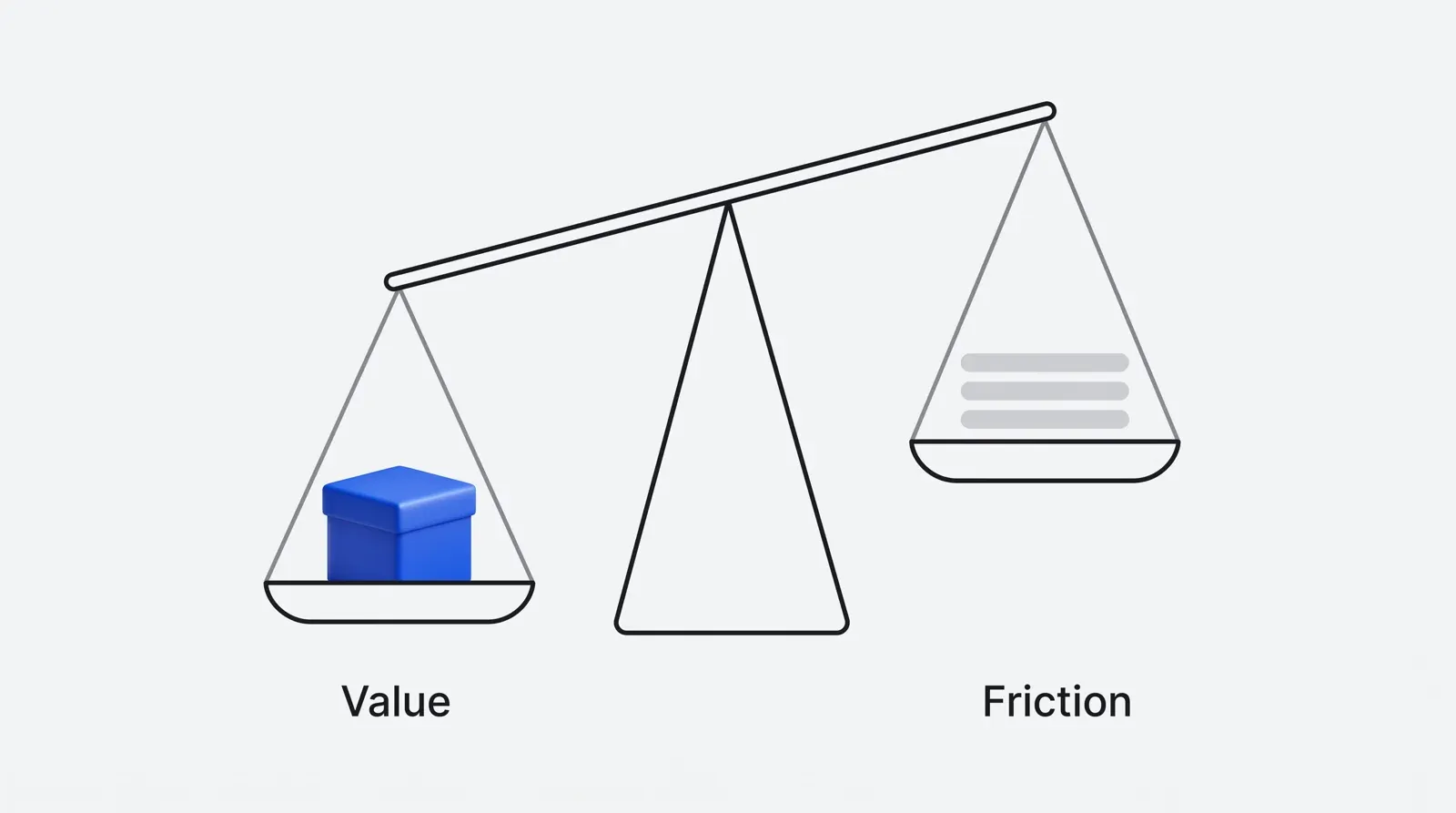
A lead magnet is a specific piece of content or a small tool a business gives away free in exchange for a visitor's contact details, usually an email address. It works because giving something useful first creates a felt obligation to reciprocate, and it converts only when that value clearly outweighs the friction of handing over personal information.
- Origin
- No single inventor; direct-response and internet marketing practice, practice-based, no founding date
- Level
- 201 · Tool
- Fits
- Startup, Small and mid-size
- Time to apply
- half a day to build a first version, longer for anything touching health or financial data
- What you need
- one real, narrow question your buyer already has this week · a place, a CRM field or an email tool, to send the contact once they hand it over
A lead magnet is a specific piece of content or a small tool, a guide, a checklist, a calculator, that a business gives away free in exchange for a visitor’s contact details, usually an email address. Teams reach for it at the top of a funnel, before a visitor is ready to talk to sales, as a fair first exchange instead of a cold ask.
Where the practice came from
No single person invented the lead magnet, and no source claims one did. The closest direct ancestor in the professional literature is Seth Godin’s 1999 book Permission Marketing, which argued that interrupting strangers was losing to a different approach: offer something of value first, and earn the right to talk to someone again. The term “lead magnet” itself then spread through internet and content marketing practice over the following two decades, with no single founding article or company behind it. What marketers call a lead magnet today, a direct-mail marketer in the 1980s would have called a free booklet offer, and the mechanism underneath has not changed.
Why giving something away first works
The pull comes from a well-documented psychological rule. Sociologist Alvin Gouldner described reciprocity in 1960 as close to a universal social norm: receiving something creates an obligation to give something back, independent of whether the receiver even likes the giver. Robert Cialdini’s book Influence cites the same pattern in a restaurant experiment where servers who left a single piece of candy with the check saw tips rise, and two candies raised them further. Dennis Regan’s 1971 lab study showed how strong the pull is on its own: participants who were handed an unsolicited soft drink by a stranger later bought roughly twice as many raffle tickets from that same person, and their liking for him had nothing to do with it. The obligation to reciprocate, not the relationship, drove the result.
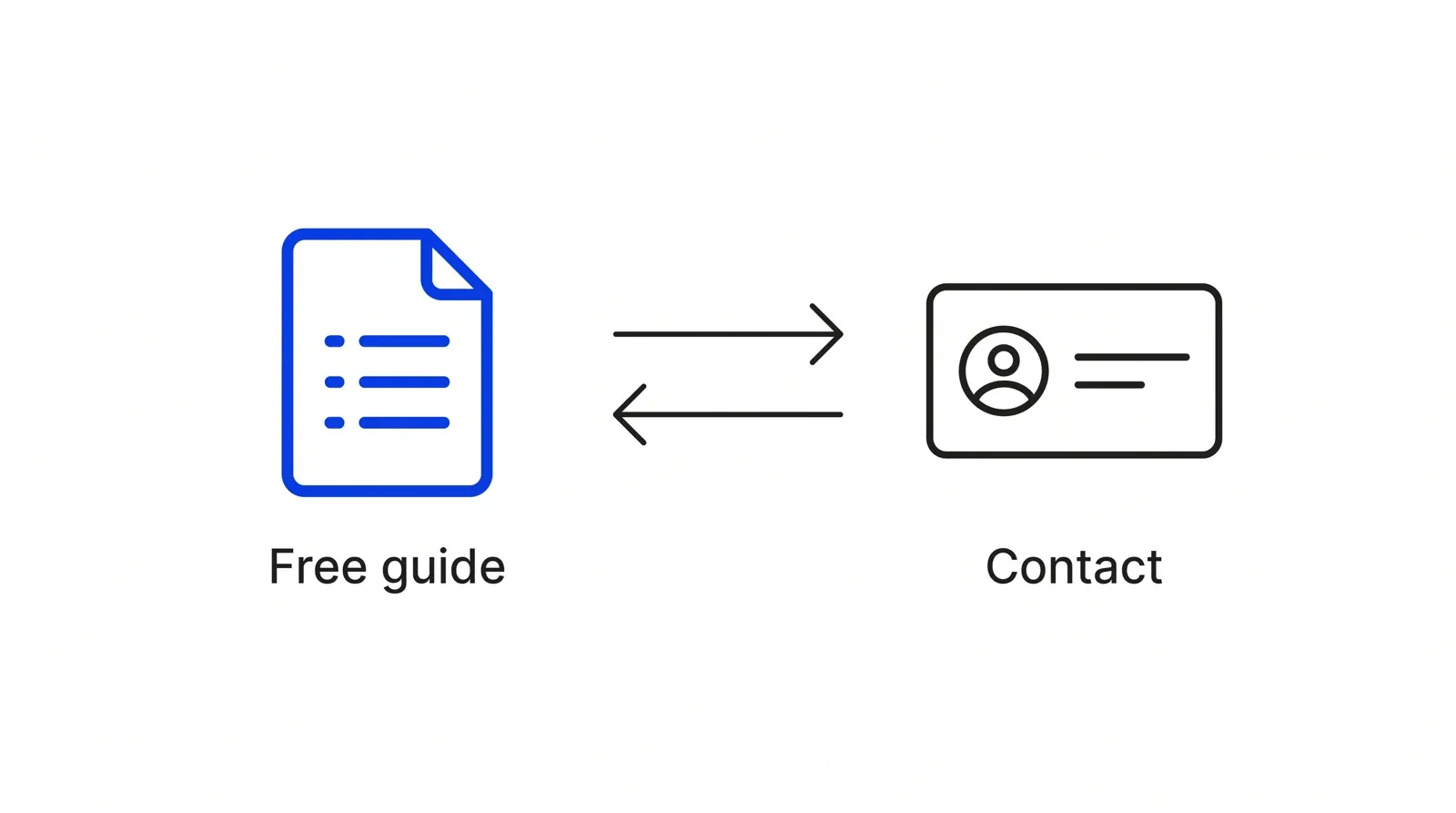
Research on business relationships finds a version of the same effect. Palmatier, Jarvis, Bechkoff and Kardes, writing in the Journal of Marketing, found that gratitude from an unprompted benefit predicts stronger purchase intent and sales growth over time, distinct from the more familiar drivers of trust and commitment. A useful free guide works on the same principle a free sample always has. Give something real first, and the reader is more willing to give something back, starting with their contact details.
The value and the friction have to balance
A lead magnet only converts when the value on offer clearly outweighs the friction of the form asking for it. Research on information privacy, reviewed by Smith, Dinev and Xu in MIS Quarterly, describes this as a calculation people make consciously or not: they trade personal data for a benefit only when the perceived value clears the perceived risk and effort. A five-field form in exchange for a useful calculator can clear that bar easily. The same form in exchange for a thin, generic checklist usually will not.
Content Marketing Institute and MarketingProfs’ 2025 survey of 980 B2B marketers found 51% still use e-books or white papers as gated assets, so the format remains common. Forrester has pushed back on gating by default, arguing that content should stay open unless it is valuable enough that the trade is obviously fair, and separate Forrester research found that 64% of business buyers at manager level or above are now Millennials or Gen Z who expect to research on their own before a gate slows them down. A 2021 PLOS ONE study of content marketing effectiveness found the determining factors were a real content strategy, organizational commitment and measurement, not the number of channels a piece was pushed through. The lesson from all three sources points the same direction: make the thing itself worth the ask, then ask for as little as the next step needs.
What changes when the contact is a patient or an account holder
The rules around what a lead magnet may ask for get stricter once health or money is involved, and the regulator’s own text is specific about it. Under GDPR Article 9, data revealing a person’s health status is a special category, processing of which is prohibited by default outside narrow exceptions such as explicit consent. A fitness or clinic lead magnet that asks what condition a visitor is managing has crossed into that category the moment the form is submitted. GDPR Article 7 and Recital 43 add a second constraint that applies more broadly: consent has to be freely given, and the European Data Protection Board’s 2020 guidelines on consent warn against bundling agreement to unrelated marketing processing into the price of a free download, since that conditionality can make the whole consent invalid.
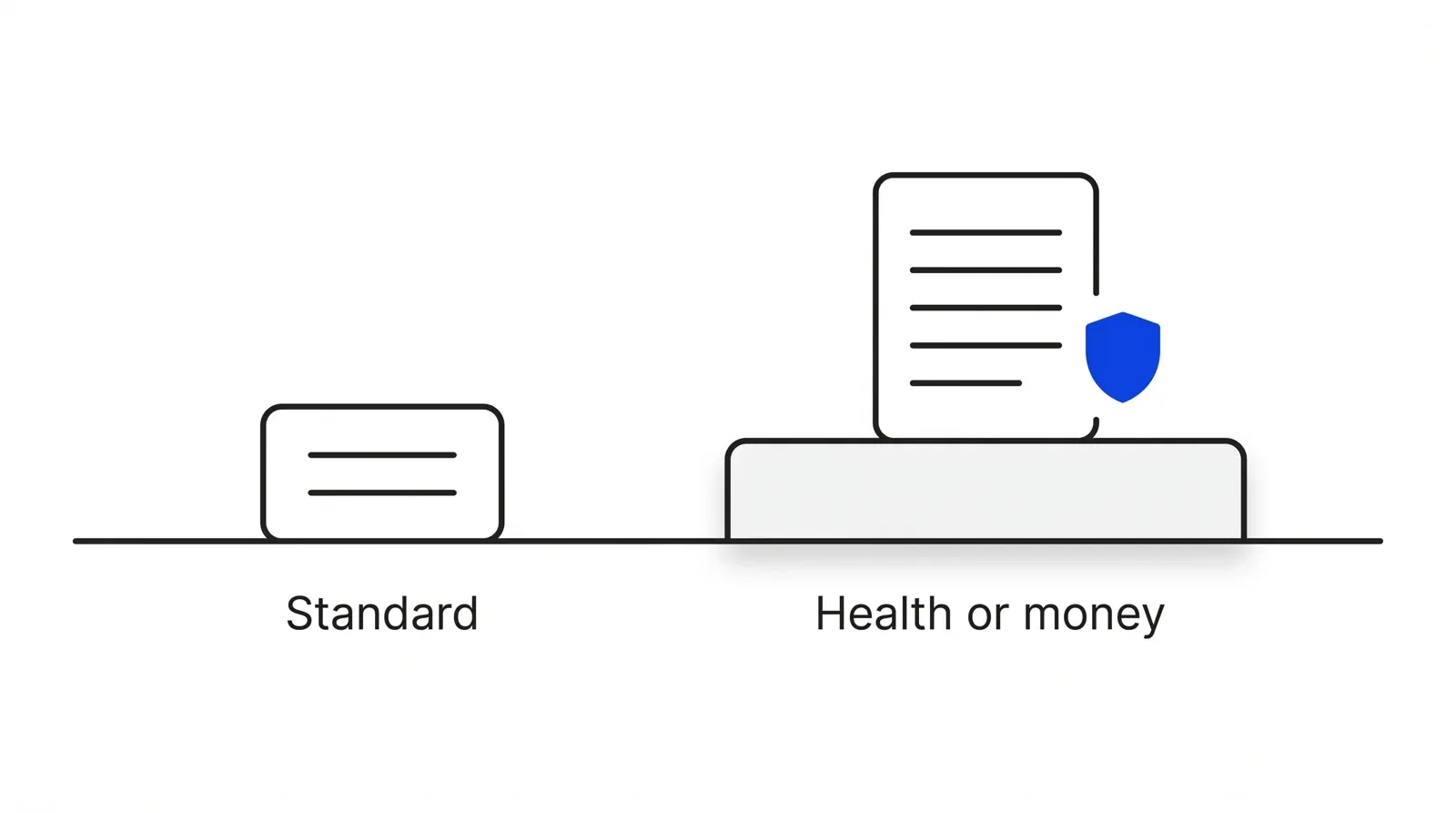
In the US, a fintech collecting income, account numbers or other nonpublic financial detail through a lead magnet form falls under the FTC’s Safeguards Rule the moment the business counts as a financial institution, which requires a real information security program around that data. Health information sits outside HIPAA more often than people assume: HIPAA’s own text, in 45 CFR Part 160, defines a covered entity narrowly as a health plan, a clearinghouse, or a provider transmitting health information electronically, so a marketing landing page run by a company that is none of those is not automatically covered. That gap is exactly why the FTC updated its Health Breach Notification Rule in 2024 to reach health apps and similar services outside HIPAA, requiring a breach notice regardless. Following up by email afterward has its own layer: in the UK and EU, the ePrivacy Directive requires prior opt-in consent for marketing email by default, and the UK Information Commissioner’s Office is explicit that the “soft opt-in” exception, which lets a business email existing customers about similar products without asking again, does not cover “prospective customers or new contacts”, which is exactly what a lead magnet produces. In the US, CAN-SPAM allows email without prior opt-in but still requires an accurate header, a clear ad label and a working opt-out on every message. This section summarises the rules as written; it is not legal advice for a specific case.
Lead magnet or free trial
The two get confused because both trade something free for contact details up front.
| Lead magnet | Free trial | |
|---|---|---|
| Gives away | A finished piece of content or a small tool | Temporary access to the actual product |
| Typical ask | Name and email | Email, sometimes payment details on file |
| Ends when | The reader has the answer | The trial period expires |
| Proves | The topic matters to this reader | The product itself works for them |
Use a lead magnet when a visitor has not decided the product is the answer yet and needs to see the business understands the problem first. Use a free trial once they already believe the product could work and need to confirm it before paying.
A lead magnet that answers one real question and asks for little in return fits naturally into the kind of acquisition system covered in Pushers’ growth lab work, where every piece of content has a next step already planned for the contact it produces.
How to apply Lead magnet, step by step
- Pick one question, not a topic. Find the single question a buyer is actually typing into a search box or asking a salesperson this week, not a broad theme. A narrow question is easier to answer completely, and a complete answer is what makes the trade feel fair.
- Build something that finishes the job on its own. The guide, calculator or checklist has to solve the stated problem by itself, with no follow-up call required to make sense of it. A teaser that only sets up a sales pitch breaks the trade the reader agreed to.
- Ask for only what the next step needs. A newsletter needs an email address. A sales follow-up needs a name and a company. Nothing on the form should exist just because it was easy to add a field.
- Put the form where the value is obvious. Show what the reader gets, in one sentence, right next to the form, not on a separate page. A visitor who cannot see the trade will not make it.
- Get real consent for what happens after the download. A download is not the same as permission to email someone indefinitely. Add a clear, unticked box for follow-up marketing, separate from the box that releases the file.
- Watch what happens after the download, not just the download count. A high download count with no replies, no bookings and no further reads means the topic was popular but the offer did not move anyone forward. Track the next action, not the form fill.
Examples
A fintech fee calculator
Illustrative: a cross-border payments company builds a small calculator that shows a business exactly what a transfer will cost across three routes, no account required to see the result. Asking for an email to send a saved copy of the comparison is a fair trade, since the calculator already delivered the answer. Asking for a bank account number or monthly revenue on the same form is not, and it pulls that data under rules like the FTC Safeguards Rule the moment the business is a covered financial institution.
A clinic pre-visit guide
Illustrative: a physiotherapy clinic offers a short guide on what to expect and bring to a first consultation, in exchange for a name and email to send appointment reminders. The guide does not ask what the visit is for. The moment a form asks about symptoms or a diagnosis, that answer becomes health data under GDPR Article 9, and the clinic needs a clear, separate basis for collecting it, not a bundled checkbox.
When to use it
Use it early in a relationship, when a visitor is not ready to talk to sales but has a specific enough problem that one piece of content can solve it outright. It works best as the first fair exchange in a funnel that already has a next step planned for the contact it produces.
When not to use it
Skip it when there is nothing to say that is not already free elsewhere, or when the only plan for the contact is to add it to a large list with no follow-up. Skip it too when the topic needs sensitive health or financial detail to be useful; build a narrower version instead, or handle that conversation through a proper form with the consent and security controls the data actually requires.
Common mistakes
- Gating something that is not actually valuable on its own, so the download count looks strong and nothing about the buyer relationship changes.
- Asking for a phone number, company size and budget before giving anything back, which undoes the exact obligation the reciprocity research describes.
- Treating a download as consent to email someone indefinitely, when in the UK and EU a first-time contact does not qualify for the soft opt-in that covers existing customers.
- Requesting health or financial detail a landing page has no real way to protect, instead of asking only what the next step needs.
- Copying a competitor's lead magnet topic without checking it answers a question this specific audience actually has.
FAQ
What is a lead magnet, in simple words?
A lead magnet is something free, a guide, a checklist, a small calculator, that a business gives a visitor in exchange for their contact details, usually an email address. It works because the visitor gets a real answer first, and giving something useful before asking for anything back is what makes people willing to hand over their information.
What makes a lead magnet actually work?
It works when the value is obvious and the ask is small next to it. A narrow, complete answer to one real question beats a broad guide, and a short form beats a long one. If a visitor has to guess what they are getting, or hand over more than the next step needs, the trade stops feeling fair and they leave.
Can a lead magnet be delivered by a bot?
Yes. A chatbot or an automated flow can hand over the file, the calculator result or the checklist the moment someone provides an email, and that is common practice now. The delivery channel does not change what is fair to ask for. A bot collecting health or financial detail is still bound by the same consent and data rules a form would be.
Is a lead magnet the same as a subscription?
No. A lead magnet is usually a single, one-time piece of content traded for contact details, while a subscription is an ongoing commitment, paid or free, to keep receiving something. A newsletter someone joins after downloading a lead magnet is a separate decision, and it needs its own clear opt-in, not an assumption carried over from the download.
Do you need consent to email someone after they download a lead magnet?
In the UK and EU, generally yes. The GDPR requires freely given, specific consent for marketing email, and the soft opt-in that lets a business email existing customers about similar products does not cover a brand-new contact from a download. In the US, CAN-SPAM does not require opt-in first, but every message still needs an accurate header, a clear ad label and a working opt-out.
Sources
- Robert B. Cialdini, Influence: Science and Practice, 5th ed., Pearson, 2009, Open Library record
- Alvin W. Gouldner, The Norm of Reciprocity: A Preliminary Statement, American Sociological Review 25(2), 1960
- Dennis T. Regan, Effects of a Favor and Liking on Compliance, Journal of Experimental Social Psychology 7(6), 1971, ERIC
- Robert W. Palmatier, Cheryl Burke Jarvis, Jennifer R. Bechkoff, Frank R. Kardes, The Role of Customer Gratitude in Relationship Marketing, Journal of Marketing 73(5), 2009
- H. Jeff Smith, Tamara Dinev, Heng Xu, Information Privacy Research: An Interdisciplinary Review, MIS Quarterly 35(4), 2011, AIS eLibrary
- Seth Godin, Permission Marketing: Turning Strangers into Friends and Friends into Customers, Simon & Schuster, 1999, Open Library record
- European Union, Regulation (EU) 2016/679 (GDPR), Article 7, Conditions for consent, EUR-Lex
- European Union, GDPR Recital 43, on consent and imbalance of power, EUR-Lex
- European Union, GDPR Article 9, Processing of special categories of personal data, EUR-Lex
- European Union, GDPR Article 6, Lawfulness of processing, EUR-Lex
- European Data Protection Board, Guidelines 05/2020 on consent under Regulation 2016/679, Version 1.1
- European Union, Directive 2002/58/EC (ePrivacy Directive), consolidated text, Article 13, Unsolicited communications, EUR-Lex
- Information Commissioner's Office (UK), Electronic mail marketing, guide to PECR
- US Federal Trade Commission, CAN-SPAM Act: A Compliance Guide for Business
- US Federal Trade Commission, FTC Safeguards Rule: What Your Business Needs to Know
- US Federal Trade Commission, Updated FTC Health Breach Notification Rule puts new provisions in place to protect users of health apps and devices, 2024
- 45 CFR Part 160, HIPAA general administrative requirements, U.S. Government Publishing Office
- Content Marketing Institute and MarketingProfs, B2B Content Marketing: 2025 Benchmarks & Trends
- Jennifer Rouse, To Gate or Not to Gate, Is That Really the Question?, Forrester
- Naomi Marr, Digital Natives Are Rewriting B2B Buying and Its Impacting Your Revenue Performance, Forrester
- Determinants of content marketing effectiveness: Conceptual framework and empirical findings from a managerial perspective, PLOS ONE 16(4), 2021
Last updated Sep 25, 2026


DORA for marketing and operations teams
What the EU Digital Operational Resilience Act changes for teams outside IT: vendor registers, incident reporting and who owns compliance without a CISO.

The compliance layer under fintech marketing operations
A fintech marketing agency can build campaigns. It cannot own the compliance review, the KYC drop-off or the multi-market licensing rules that decide whether a lead ever becomes a customer.

Fractional CMO: what you get, and what has to exist underneath
A fractional CMO brings strategy and judgment. Without reporting, CRM hygiene and a named owner per number, the engagement produces a slide deck instead of a system.