Brand platform
A brand platform is a short internal document that fixes a brand's purpose, positioning, personality, values and promise, so that everyone who writes, designs, sells or serves for the company works from the same decisions.
A brand platform is a short internal document that records five decisions about a brand: its purpose, its positioning, its personality, its values and the promise customers can hold it to. It is agency practice with no single inventor, and it draws on Kevin Lane Keller's customer-based brand equity model and Jean-Noël Kapferer's brand identity prism. Teams use it to brief agencies, hire and keep messaging consistent.
- Origin
- Agency practice, no single inventor; academic anchors in Kevin Lane Keller (customer-based brand equity, brand resonance) and Jean-Noël Kapferer (brand identity prism), Keller 1993 and 2001; Kapferer's prism early 1990s (sources differ on the year)
- Level
- 201 · Tool
- Fits
- Small and mid-size, Scale-up
- Time to apply
- two to three weeks: one week of customer and staff interviews, two workshops, a week of testing against real copy
- What you need
- notes from 10 or more customer interviews and a handful of staff interviews, including frontline staff · the current positioning statement, if one exists, and the three competitors customers compare you with · a founder or CEO who will make the final call on each part
A brand platform is a short internal document that records the decisions behind a brand: why it exists, whom it serves and how it differs, how it sounds, what it values and what it promises. It is written for the people who make the brand: marketers, salespeople, support staff, designers, recruiters and outside agencies. Customers do not see it.
Nobody invented the brand platform. It grew out of agency practice, and every agency has its own version under a different name: brand house, brand key, brand pyramid, brand bible. Two academic models sit underneath most of them. Kevin Lane Keller’s customer-based brand equity model, published in the Journal of Marketing in 1993, explains what a brand has to build in customers’ memory. Jean-Noël Kapferer’s brand identity prism, from his book Strategic Brand Management, describes the sides of a brand’s identity that a company decides on. Sources date the prism to the late 1980s or early 1990s and do not agree on the year.
What goes into a brand platform?
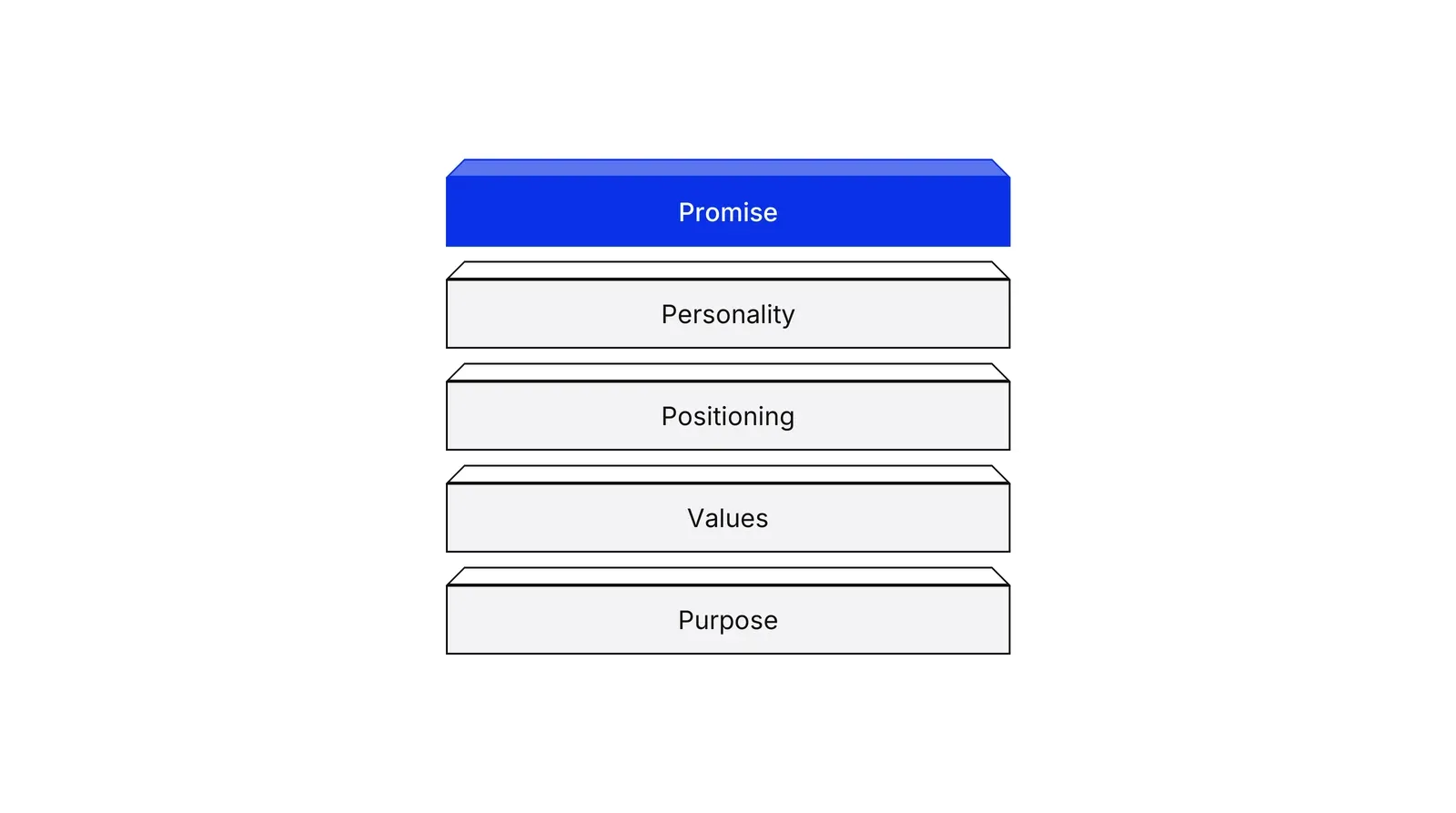
Most platforms answer five questions. The field names vary by agency, but the questions stay the same.
| Part | Question it answers | Test that it works |
|---|---|---|
| Purpose | Why does the company exist, beyond making money? | It rules some business out |
| Values | Which principles do we keep even when they cost us? | It changes a hiring or product decision |
| Positioning | For whom, against what, and why us? | A salesperson can repeat it in one breath |
| Personality | How do we sound and behave? | A new copywriter can apply it without asking |
| Promise | What can a customer hold us to? | Operations can measure it |
The order matters. Purpose and values are slow to change and come first. Positioning and personality follow from them and from the market. The promise sits on top because it is the only part a customer experiences directly.
Purpose: a filter for decisions
Purpose is the reason the company exists beyond profit. Jim Collins and Jerry Porras, in their 1996 Harvard Business Review article Building Your Company’s Vision, describe core purpose and core values as the part of a company that stays fixed while strategy changes. Their workshop materials give examples: 3M’s purpose is to solve unsolved problems innovatively, and Disney’s is to make people happy.
The most useful test in those materials is whether a purpose helps you decide what not to do. Collins cites Hewlett-Packard, which stayed out of markets where it could not make a technical contribution. A purpose that rules nothing out is a slogan.
Keep purpose mostly inside the company. Simon Sinek’s 2009 TED talk made “start with why” popular in agencies, but customers notice less than marketers hope. An Ehrenberg-Bass Institute study of almost 3,000 people in the UK, the US and Australia tested 14 brands known for their purpose. Average recognition was 18% in the UK, 22% in the US and 14% in Australia, and those figures include roughly 9 points of guessing. The IPA’s review Effective on Purpose reached a related conclusion: the evidence that purpose campaigns drive results is thin, and better evidence is needed.
Values that change decisions
Values belong in the platform only if they would change a decision. Patrick Lencioni argued in Harvard Business Review in 2002 that most values statements do more harm than good, because they list words every company would sign. His later framework, summarised in University of New Hampshire course material, separates four kinds of values:
- core values, which the company already lives and will not trade away;
- aspirational values, which it needs but does not have yet;
- permission-to-play values, such as honesty and respect, which are minimum standards;
- accidental values, which grew up in the culture without anyone choosing them.
Only core values belong in the platform. Collins’s workshop asks teams to settle on three to five and to test each one: would you keep it even if it became a competitive disadvantage? Mats Urde’s study of more than 50 companies over ten years, with Volvo as the main case, describes core values as “guiding lights for the brand building process.”
Positioning and personality
Positioning is the place the brand wants to hold in the customer’s mind against the alternatives, an idea Al Ries and Jack Trout set out in their 1981 book Positioning. Keller, Brian Sternthal and Alice Tybout added structure in HBR in 2002: name the frame of reference (the category you compete in), the points of parity you must match, and the points of difference you win on. Their examples include Maytag’s dependability and BMW’s handling. The positioning statement is the usual format for this part of the platform.
Personality describes how the brand sounds and behaves. Jennifer Aaker’s 1997 brand personality scale found five dimensions in consumer ratings: sincerity, excitement, competence, sophistication and ruggedness. Many agencies use a character model instead, such as brand archetypes. Either way, write what each trait means in a real support email, not only in an ad.
The promise, and the gap behind it
The brand promise is the one thing a customer can hold the company to. It is where most platforms fail. In a 2015 analysis Gallup reported that only about half of the nearly 18 million customers it had surveyed strongly believe companies always deliver what they promise. In the same Gallup data, only 27% of employees strongly agreed that they always deliver on promises made to customers.
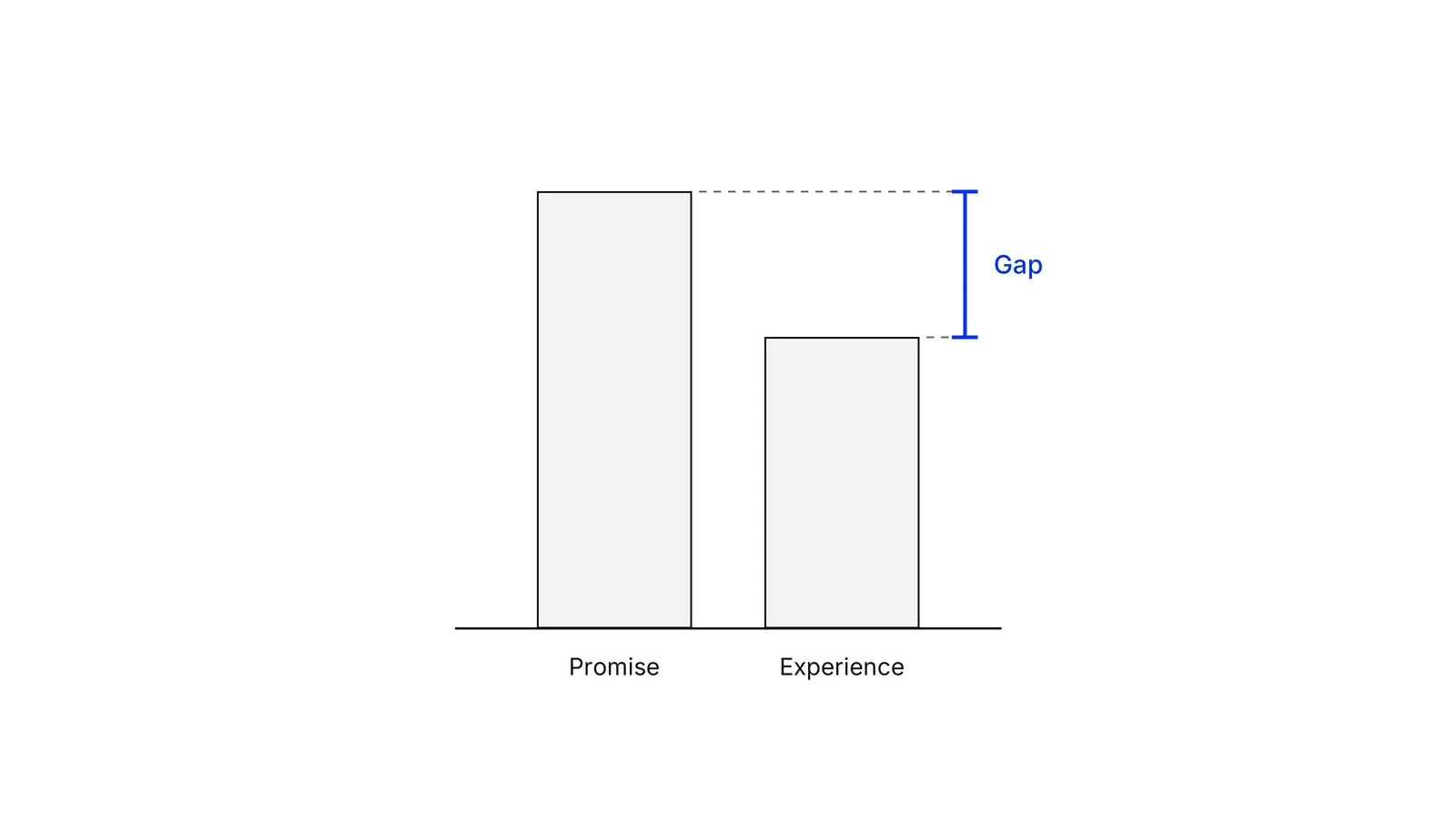
The fix starts inside. Colin Mitchell of Ogilvy argued in Selling the Brand Inside that employees are the audience who can make the promise real. Gallup’s William McEwen wrote in 2002 that “far too many employees have no idea what their company’s brand promise is.” Write the promise so that operations can measure it, give it an owner, and teach it to every new hire. That makes the platform part of the marketing-operational system rather than a file in a shared drive.
Brand platform, identity prism or resonance pyramid?
The three are often mixed up. They answer different questions.
| Brand platform | Kapferer’s identity prism | Keller’s resonance pyramid | |
|---|---|---|---|
| What it is | An internal decision document | A model of brand identity | A model of brand equity in customers’ minds |
| Parts | Purpose, values, positioning, personality, promise | Physique, personality, culture, relationship, reflection, self-image | Salience, performance, imagery, judgments, feelings, resonance |
| Point of view | The company’s choices | What the company sends and how customers see themselves | What customers know, feel and do |
| Use | Brief teams and agencies | Check that identity is complete and coherent | Plan and measure brand building |
Use the prism to check that the platform covers every side of identity. Use the pyramid, set out in Keller and Swaminathan’s Strategic Brand Management, to decide what to measure once the platform is live.
How to apply Brand platform, step by step
- Collect evidence before the workshop. Interview customers about why they chose you and what they would use instead, and ask frontline staff what customers praise and complain about. Pull the last quarter's reviews and lost-deal notes. Result: a page of quotes that every later decision has to match.
- Agree on purpose and values first. In a first workshop, draft the purpose and three to five core values, then run each value through Jim Collins's test: would you keep it if it cost you business? Drop anything that is only a minimum standard, such as honesty. Result: one purpose sentence and a short list of values that would change a decision.
- Write the positioning. Name the target customer, the category you compete in, what you share with the alternatives and the one or two points of difference you can prove. Use a positioning statement as the format. Result: a positioning that a salesperson could repeat in one breath.
- Describe the personality and the voice. Pick three to four traits, write one line on what each means in practice and one line on what it does not mean. Rewrite a real support email and a real ad in that voice. Result: a voice a new copywriter can apply without asking.
- Turn it into one promise and check delivery. Write the promise as something a customer could check: a response time, an outcome, a guarantee. Then ask operations whether the business delivers it today, and where it does not. Result: a promise with an owner and a list of gaps to close.
- Publish one page and review it twice a year. Fit the platform on one page, share it with every team and agency, and add it to onboarding. Review it every six months against reviews, sales notes and staff feedback. Result: a document people use, with a date for its next check.
Examples
A B2B payments company with three sales pitches
Illustrative. A cross-border payments firm finds that sales sells speed, marketing sells low fees and support talks about compliance. Customer interviews show that finance teams choose it because payments arrive on the promised day. The platform makes that the promise: funds arrive on the date shown at the time of payment, or the fee is refunded. Positioning moves to reliability against banks, personality becomes calm and precise, and the low-fee message moves to a supporting point. Operations owns the promise and reports the on-time rate monthly.
A dental clinic opening a second site
Illustrative. A clinic with one site and a strong local reputation is about to hire 15 new staff for a second location. Its values page lists integrity, quality and care, which every clinic in town could claim. In the workshop the team keeps one value that changes decisions: no treatment plan without a written price before the first appointment. That becomes the promise, the personality is set as plain-spoken and unhurried, and the new hires learn the platform in their first week.
When to use it
Use it when more than one team or agency produces messages for the brand, before a rebrand or a new market entry, after a merger, or when the company is about to hire fast and new staff need to know what the brand stands for without asking the founder.
When not to use it
Skip it before product-market fit, when the positioning is still changing every month and a positioning statement plus customer interviews will do more. Skip it too as a substitute for fixing the service: if customers complain about the basics, a platform only writes down a promise the business cannot keep.
Common mistakes
- Writing values every competitor could claim, such as integrity, quality and innovation, which Lencioni would call permission-to-play values rather than core values.
- Putting purpose in customer advertising and expecting it to sell, when Ehrenberg-Bass research found most people cannot recognise even well-known brands' purposes.
- Making a promise operations cannot deliver, so the platform turns into the reason customers complain.
- Letting a workshop write it with no customer evidence, so the positioning describes the founders' view of the company instead of the customers' reasons to buy.
- Producing a 40-page brand book and calling it a platform, so nobody outside marketing reads it.
FAQ
What is a brand platform?
A brand platform is a short internal document that records a brand's purpose, positioning, personality, values and promise. It is not shown to customers. Marketing, sales, product, HR and outside agencies use it as the reference for decisions, so that ads, sales pitches, service and hiring all point at the same idea of the brand.
How do you develop a brand platform?
Start with evidence: customer interviews, staff interviews, reviews and lost-deal notes. Then agree on purpose and values, write the positioning, define the personality and voice, and turn everything into one checkable promise. Test it on real copy and with operations before publishing, and review it every six months.
What does a brand platform model include?
Most agency models include five parts: purpose, positioning, personality, values and promise. Some add a vision, a brand essence or tagline line, proof points and a target audience. Names differ, from brand house to brand key, but each version answers why the brand exists, for whom, how it sounds and what it guarantees.
What is the difference between a brand platform and brand guidelines?
A brand platform records strategic decisions: what the brand stands for and promises. Brand guidelines, or a brand book, show how to express it: logo, colours, type, imagery and tone rules. The platform comes first. Guidelines written without one tend to describe a look with no agreed meaning behind it.
Who should own the brand platform?
Marketing usually drafts and maintains it, but the CEO or founder should approve it, because the values and the promise bind the whole company. Operations should co-own the promise, since it has to deliver it, and HR should use the values in hiring and onboarding.
Sources
- Kevin Lane Keller, Conceptualizing, Measuring, and Managing Customer-Based Brand Equity, Journal of Marketing 57(1), 1993
- Stanford Graduate School of Business, Kevin Keller, Conceptualizing, Measuring, and Managing Customer-based Brand Equity, working paper 1140, 1991
- Kevin Lane Keller, Vanitha Swaminathan, Strategic Brand Management, 5th edition, Pearson, 2020
- Harvard Business Review, Kevin Lane Keller, Brian Sternthal, Alice Tybout, Three Questions You Need to Ask About Your Brand, 2002
- Harvard Business Review, Kevin Lane Keller, The Brand Report Card, 2000
- Jean-Noël Kapferer, The New Strategic Brand Management, 5th edition, Kogan Page, 2012
- Jean-Noël Kapferer, Strategic Brand Management, Free Press, 1994, Internet Archive record
- David A. Aaker, Building Strong Brands, Free Press, 1996, Internet Archive record
- Jennifer L. Aaker, Dimensions of Brand Personality, Journal of Marketing Research 34, 1997
- Harvard Business Review, James C. Collins, Jerry I. Porras, Building Your Company's Vision, 1996
- Jim Collins, Vision Framework: core ideology and envisioned future breakout sessions, 2001
- Harvard Business Review, Patrick M. Lencioni, Make Your Values Mean Something, 2002
- University of New Hampshire, College of Health and Human Services, Dept Values: A Framework for Consideration (after Lencioni, The Advantage)
- Mats Urde, Core value-based corporate brand building, European Journal of Marketing 37(7/8), 2003
- Lund University School of Economics and Management, Mats Urde publications, including Corporate Brand Identity Matrix, Journal of Brand Management, 2013
- Harvard Business Review, Stephen A. Greyser, Mats Urde, What Does Your Corporate Brand Stand For?, 2019
- Harvard Business Review, Mary Jo Hatch, Majken Schultz, Are the Strategic Stars Aligned for Your Corporate Brand?, 2001
- Harvard Business Review, Colin Mitchell, Selling the Brand Inside, 2002
- Gallup, Ed O'Boyle, Amy Adkins, Companies Only Deliver on Their Brand Promises Half the Time, 2015
- Gallup Business Journal, William J. McEwen, Beware of Empty Promises, 2002
- Ehrenberg-Bass Institute, study of brand purpose awareness across 14 brands, reported by Marketing Week
- IPA, Effective on Purpose
- TED, Simon Sinek, How great leaders inspire action, TEDxPuget Sound, 2009
- Al Ries, Jack Trout, Positioning: The Battle for Your Mind, Warner Books, 1981, Internet Archive record
Last updated Oct 9, 2026


The compliance layer under fintech marketing operations
A fintech marketing agency can build campaigns. It cannot own the compliance review, the KYC drop-off or the multi-market licensing rules that decide whether a lead ever becomes a customer.

Fractional CMO: what you get, and what has to exist underneath
A fractional CMO brings strategy and judgment. Without reporting, CRM hygiene and a named owner per number, the engagement produces a slide deck instead of a system.

The operations layer behind healthcare patient acquisition
Ads and search bring the request in. What happens between the click and the booked, attended visit decides whether the spend paid off.