Link building and digital PR
Link building is the work of getting other websites to link to your pages, and digital PR is the part of it that earns those links by giving journalists and editors something worth citing.
Link building is the process of getting other websites to link to pages on your site, so that search engines and readers treat those pages as worth finding. Digital PR is the branch that earns links through stories, data and expert comment that journalists choose to cite. Google allows earned links and treats links placed mainly to manipulate rankings as link spam.
- Origin
- Practitioner discipline with no single inventor, built on the PageRank idea of Larry Page and Sergey Brin (Stanford), 1998 (PageRank paper)
- Level
- 201 · Tool
- Fits
- Small and mid-size, Scale-up
- Time to apply
- one week to audit and plan, then a quarter of outreach before judging results
- What you need
- a page worth citing: your own data, a tool, a clear explanation or a documented case · access to Google Search Console for your site · a list of 30 to 50 sites and reporters that already link to topics like yours · one person who sends the pitches and keeps a log
Link building is the process of getting other websites to link to pages on your site. Ahrefs defines it that way and adds the purpose: raising a page’s authority in Google’s eyes so it ranks higher and draws more search traffic. Digital PR is the branch of link building that earns those links through coverage, by offering journalists and editors data, expert comment or a story they want to cite.
Where the idea comes from
Search engines rank on links because early researchers found that links carry information. Sergey Brin and Lawrence Page’s 1998 paper in Computer Networks described Google as a prototype that relies heavily on the structure of hyperlinks. Jon Kleinberg of Cornell, whose work appeared as an IBM report in 1997 and at the ACM-SIAM symposium in 1998, showed how link structure can reveal “authoritative” pages on a topic.
Manipulation followed almost at once. Zoltan Gyongyi and Hector Garcia-Molina of Stanford wrote a taxonomy of web spam in 2005 to help search engines understand the tricks. That tension still shapes every tactic below.
Do links still matter?
Yes, as one signal among many. Google Search Central’s ranking systems guide says PageRank “continues to be part of our core ranking systems”. The SEO starter guide adds that there is much more to Google Search than links, and that links are how Google primarily finds new pages.
Ahrefs tested 44,589 keywords and expected links from pages with traffic to track rankings better than total links. They did not, and Ahrefs itself calls its data flawed. Treat any “number of links needed” claim with the same caution.
Muck Rack, a PR software vendor, reports that about 84% of the 25 million links cited by ChatGPT, Claude and Gemini in its sample were earned media, and 0.3% were paid. The same source cites OtterlyAI data that 59.8% of Google AI Overviews citations come from brand-owned domains, and that Perplexity draws 16.9% from Reddit and forums, so the figure is not universal.
Four ways to get a link
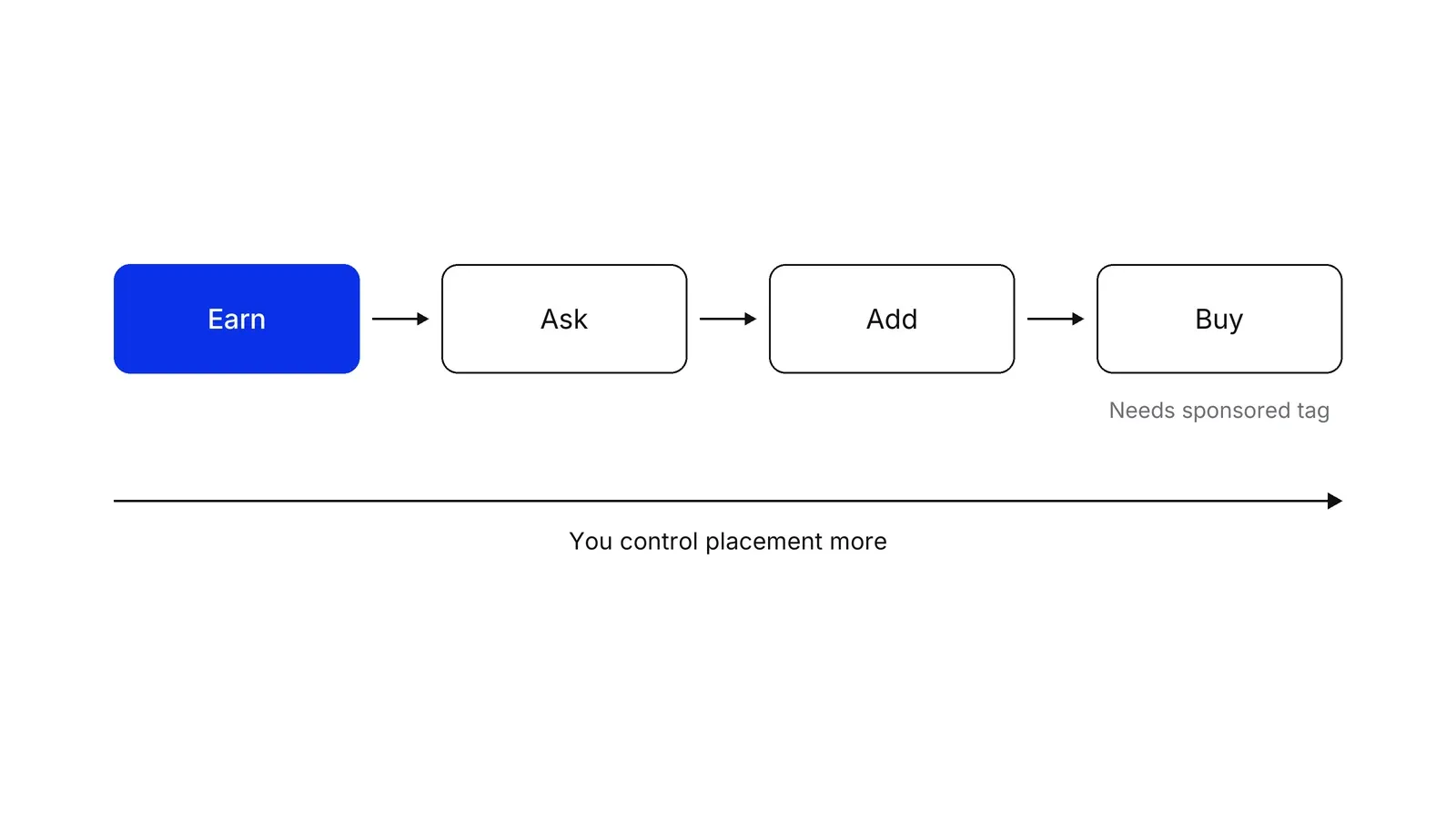
Ahrefs sorts tactics into four buckets: adding links yourself, asking for them, buying them and earning them. For outreach, it calls five links from a hundred emails a good result. They differ in how much control you have over placement.
| Method | What it looks like | Google’s view |
|---|---|---|
| Earn | Data, tools or stories that others cite unprompted | Fine |
| Ask | Outreach, resource pages, broken link replacement, unlinked mentions | Fine when the link is an editorial choice |
| Add | Business profiles, review sites, forums | Low value, and low-quality directories are listed as spam |
| Buy | Paid placements | Spam for ranking, acceptable with rel=sponsored or nofollow |
Guest posting shows how the line moves. Matt Cutts of Google wrote in January 2014 that guest blogging for SEO had become too spammy, while a guest post written for exposure could still be worthwhile. Brian Dean of Backlinko took the opposite approach with his Skyscraper Technique: improve a page that already attracts links, then email the sites that linked to it.
Digital PR: earning links with coverage
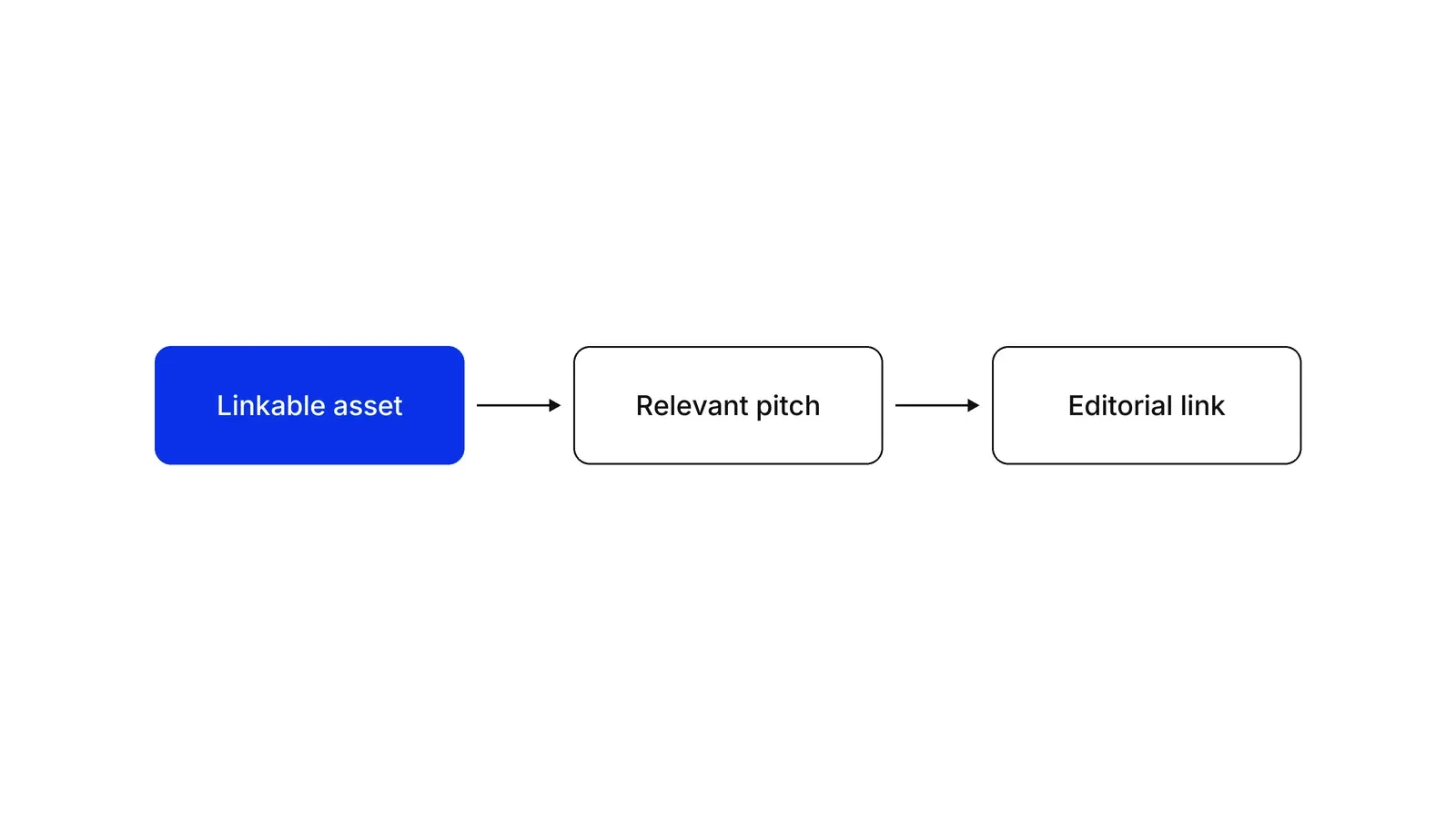
Digital PR earns links because a journalist’s story needs a source, and a good source gets linked. The sequence: an asset worth citing, a pitch that says why this reporter should care, and a link the reporter decides to place.
Relevance decides most outcomes. In Muck Rack’s 2025 survey, 86% of journalists cited irrelevance as a reason to delete a pitch, 71% an overly promotional tone and 50% a mass-email feel. Of the more than 1,500 journalists surveyed, 69% prefer pitches under 200 words and half accept one follow-up, ideally three to seven days later. Our guide to PR strategy and earned media covers audience mapping and measurement for the whole program. This page stays on the links.
Request services have shifted. Cision shut Connectively, the rebranded HARO, in December 2024, and Press Gazette reported that Featured.com bought the service and relaunched HARO as an email bulletin on 22 April 2025. Check what is live first.
What Google counts as link spam
Google defines link spam as “creating links to or from a site primarily for the purpose of manipulating search rankings”. Its spam policies list buying or selling links for ranking, excessive link exchanges, automated link creation, optimized anchor text in guest posts or press releases, low-quality directory links and widely distributed footer or template links.
Enforcement has two layers. Penguin, launched in 2012, became part of Google’s core algorithm in September 2016 and runs in real time. In December 2022 Google used SpamBrain to neutralize unnatural links over a rollout Google put at about two weeks, including detecting sites that buy links and sites that exist to pass them on. Humans also act: the Manual Actions report flags unnatural links to and from a site, and recovery means removing the links, then filing a review request.
The disavow tool is for the rare case where you have a large number of bad links you cannot get removed. Google says most sites do not need it. A disavow file is a UTF-8 text file of up to 100,000 lines and 2MB, each upload replaces the last one, and changes can take several weeks to apply.
Three attributes tell Google what a link is. Use rel="sponsored" for paid placements, ugc for user-submitted content and nofollow for the rest, as the outbound links documentation explains. Since September 2019 they count as hints, not hard instructions. Yandex gives similar advice for ads and partner placements.
Measuring and maintaining links
In Search Console, count linking sites and the pages they point to, not raw links. Google Search Console’s Links report shows top linked pages, top linking sites and top linking text, but it is a sample, shows up to 1,000 rows per table, exports up to 100,000 rows and does not show nofollow status.
Links also disappear. Ahrefs’ link rot study of 2,062,173 sites found that at least 66.5% of links to them since January 2013 had rotted, most often because the page was dropped (47.7%) or the link was removed (34.2%). Counting temporary errors and other issues, 74.5% no longer counted for ranking. Plan a steady flow of new links to replace those you lose, and check your own pages for crawlable links with descriptive anchor text. Content quality and trust signals, covered in E-E-A-T, decide whether a link is deserved. A Growth Lab plan starts from the pages worth linking to.
How to apply Link building and digital PR, step by step
- Check the links you already have. Open the Links report in Search Console and note your top linked pages, top linking sites and top linking text. It is a sample, not a full list, so add a backlink tool if you need more. Result: a baseline count of linking sites and a short list of pages that already attract links.
- Build a page worth citing. Pick one asset a journalist or editor would want to reference: first-party data, a calculator, a regulation explained clearly, a documented case. Result: one finished page on your own site, with sources, that you can point to in a pitch.
- List who already links to this kind of thing. Find the sites and reporters that linked to similar pages from competitors or from public data in your field. Prefer fewer, closer matches over a long list. Result: 30 to 50 targets, each with the page that earned a link and the name of the person who owns it.
- Pitch each target one specific reason. Write a short email that says what is new, why it fits that person's beat and where the evidence is. Follow up once, three to seven days later. Result: a pitch log with sent, replied, declined and linked.
- Mark and keep your own outbound links clean. Tag paid placements with rel=sponsored, user-submitted links with ugc, and do not exchange links at scale. Result: a site that cannot be accused of selling or swapping links.
- Review every quarter. Count new linking sites, lost links and referral traffic, and read the Manual actions report. Disavow only if a real pattern of paid or spammy links exists. Result: a decision on which assets and outlets to repeat.
Examples
The Skyscraper Technique, reported by its author
Brian Dean of Backlinko describes finding a page that already attracted many links, making a better one, then emailing the sites that linked to the original. In his account, 160 emails produced 17 links, an 11% success rate, and traffic to his site rose 110% in 14 days. These are his own figures, from one site, and not a benchmark. Ahrefs, by contrast, says five links from a hundred emails is a good result.
A payments company with fee data
Illustrative, no real company implied. A cross-border payments company publishes three years of anonymised fee data by corridor, then pitches 40 trade reporters and analysts who cover importers. At Ahrefs' benchmark of five links per hundred emails, 40 pitches would bring about two links. The point is that two links from trade titles that buyers read beat 200 from directories nobody visits.
A dermatology clinic with a sourced guide
Illustrative, no real clinic implied. A clinic's lead dermatologist publishes a patient guide to skin checks in which every figure links to a medical source, then offers it to local health reporters and a regional patient association. The clinic pays for no placement. Because health content is judged on accuracy and credentials, the sources and the doctor's profile carry the pitch.
When to use it
Use link building when you already have pages that deserve to rank but rivals hold more links, when entering a market where nobody links to you yet, or when AI answers and search results cite your competitors' coverage and not yours. It suits companies that can produce original data or real expertise.
When not to use it
Skip it while the site cannot be crawled or indexed, or when pages say nothing a reader could not get elsewhere. Fix the base first, starting with technical SEO. It is also a poor fit if the plan is to buy links for ranking: that is what Google's spam policy targets.
Common mistakes
- Buying or swapping links at scale. Google lists buying and selling links for ranking, excessive link exchanges and automated link creation as link spam.
- Judging a link by one metric. Ahrefs' own studies found links from pages with traffic did not correlate better with rankings than total links, so no single score settles quality.
- Mass guest posting with keyword-rich anchor text. Google names optimized anchors in guest posts and press releases as spam, and Matt Cutts called guest blogging for SEO spammy in 2014.
- Pitching without a reason to cover you. In Muck Rack's 2025 survey 86% of journalists named irrelevance as a reason to delete a pitch.
- Disavowing links by habit. Google calls the tool advanced and says most sites do not need it.
FAQ
What is link building in SEO?
Link building is the process of getting other websites to link to pages on your site. Search engines use links to find pages and as one signal of which pages matter. Methods range from earning links with data and stories to asking for them in outreach. Links placed mainly to manipulate rankings count as spam.
Do backlinks still matter for Google rankings?
Yes. Google's ranking systems guide says PageRank, its link analysis system, continues to be part of its core ranking systems. Google also says there is much more to Search than links, so treat links as one signal among many, not a switch you can flip.
Are nofollow links worth getting?
Often yes. Since September 2019 Google treats nofollow, sponsored and ugc as hints and may use them in ranking, so such a link can still count. It also sends real visitors and signals that your page was worth citing. Do not expect it to behave like an ordinary link.
Is buying backlinks allowed?
Google's spam policies list buying or selling links for ranking purposes as link spam. Paid placements are acceptable when marked rel=sponsored or nofollow. Yandex gives the same advice for ads and partner placements. Unmarked paid links risk a manual action or being ignored by Google's spam systems.
What is the difference between link building and digital PR?
Link building is the broad job of getting links by any acceptable method. Digital PR is one method: you give journalists data, expert comment or a story, and the links come as coverage. For the wider media plan, see our page on PR strategy and earned media.
Sources
- Google Search Central, Spam policies for Google web search
- Google Search Central, Qualify your outbound links to Google
- Google Search Central Blog, Evolving nofollow: new ways to identify the nature of links, September 2019
- Google Search Central Blog, Penguin is now part of our core algorithm, September 2016
- Google Search Central Blog, December 2022 link spam update releasing for Google Search
- Google Search Console Help, Manual Actions report
- Google Search Console Help, Disavow links to your site
- Google Search Console Help, Links report
- Google Search Central, SEO link best practices
- Google Search Central, SEO starter guide
- Google Search Central, A guide to Google Search ranking systems
- Sergey Brin, Lawrence Page, The anatomy of a large-scale hypertextual Web search engine, Computer Networks 30, 1998
- Jon M. Kleinberg, Authoritative sources in a hyperlinked environment, Cornell University
- Zoltan Gyongyi, Hector Garcia-Molina, Web spam taxonomy, Stanford University, AIRWeb 2005
- Ahrefs, Link building: the complete beginner's guide
- Ahrefs, Do links from pages with traffic help you rank higher?
- Ahrefs, Link rot study
- Matt Cutts, The decay and fall of guest blogging for SEO, January 2014
- Backlinko, The Skyscraper Technique
- PR News, The state of journalism in 2025, on Muck Rack's survey
- Muck Rack, AI citations for PR
- Press Gazette, Cision closes journalism jobs board and sells expert enquiry service, April 2025
- Yandex Webmaster Help, Recommendations on links
Last updated Oct 9, 2026


Marketing agency or growth system: when a company outgrows its agency
An agency is the right call while the founder still runs most of the company. Once the business starts copying itself into new locations or markets, it needs a system that sets goals, tests hypotheses and owns the result.

Why healthcare marketing agencies stall: the short, mid and long wins model we use with clinics
Most agencies own the click and nobody owns the front desk. How we structure clinic work in three horizons, the research behind each one, and one year of results.

Why channel tests stall after month three
Most paid channel tests do not end with a decision. They end when the budget runs out, the attribution model changes, or everyone quietly stops looking at the dashboard.