Retargeting
Retargeting shows ads to people who already visited your site, used your app or gave you their contact details, so you can bring back the ones who left before buying.
Retargeting, also called remarketing, is advertising aimed at people who have already interacted with a business: visited its website, opened its app, watched its videos or shared an email. It is used to bring back visitors who left without buying. Field experiments show it can lift visits and purchases, but platform reports overstate the effect, so its real value has to be measured with a holdout group.
- Origin
- No single inventor; online display advertising practice, practice-based; studied in field experiments from 2013
- Level
- 201 · Tool
- Fits
- Startup, Small and mid-size, Scale-up
- Time to apply
- a day to set up lists and a first campaign; four weeks for a holdout test to read
- What you need
- a tag or pixel on your site (Google tag, Meta pixel, Yandex Metrica) with goals set for key steps · a consent banner that records who agreed to advertising cookies, where the law requires one · enough traffic: Google needs at least 100 active users in a list before it serves ads · a holdout group or a lift study to measure what the ads add
Retargeting is advertising shown to people who have already interacted with a business: they visited the website, opened the app, watched a video or gave an email address. The business tags those people with a pixel or an uploaded list, then buys ads that reach them on other sites, in social feeds or in search results. Remarketing is the same thing under another name. Yandex’s advertising course says outright that the two terms now mean the same, and Google files the feature under remarketing, recently relabelled “your data”.
There is no single inventor. It grew out of display advertising practice, and the academic record starts with field experiments published from 2013 onward. Ecommerce, travel and subscription businesses use it most, because their customers often look several times before buying.
How retargeting works
A tag on your site records who did what, and the ad platform turns those records into audience lists. Google’s help pages list the main types: website visitors, dynamic remarketing that shows the exact products a person viewed, search lists that raise bids when past visitors search again, YouTube viewers, app users and Customer Match lists built from emails customers gave you.
Each list has two settings that matter. Membership duration is how long a person stays on the list; Google defaults to 30 days, allows up to 540, and recommends a window close to your sales cycle. Minimum size decides whether the list can serve at all: Google needs at least 100 active users in the last 30 days for Display, Search and YouTube. In Yandex Direct the same job is done by retargeting conditions built from Metrica goals, Metrica segments or Yandex Audiences lists.
Does retargeting work?
Randomized experiments say it does, with smaller effects than dashboards suggest. The best evidence comes from field tests where a random part of the audience did not see the ads.
| Study | Setting | Finding |
|---|---|---|
| Johnson, Lewis and Nubbemeyer, 2017 | Online retailer, display retargeting | Site visits up 17.2%, purchases up 10.5% |
| Sahni, Narayanan and Kalyanam, 2019 | Home-improvement seller | 14.6% more users returned within four weeks |
| Lambrecht and Tucker, 2013 | Online travel firm | Dynamic product ads less effective than generic ads on average |
| Hoban and Bucklin, 2015 | Financial tools provider | No effect on people who visited but never created an account |
The Lambrecht and Tucker result surprises most people. Showing someone the exact hotel they viewed did worse than a generic brand ad, except for people whose browsing suggested they had already narrowed their choice, for example by reading review sites. Bleier and Eisenbeiss (2015) found a related pattern they call overpersonalization: highly personalized banners work best right after a visit and lose effect quickly, while moderately personalized ones last longer.
Why platform reports overstate retargeting
Retargeting targets people who were already likely to buy, so attributed conversions mix the ad’s effect with intent that was there before. Lewis and Rao (2015) call this selection bias “a crippling concern” for observational measurement, after 25 large experiments in which the median confidence interval on return was over 100 percentage points wide. At eBay, Blake, Nosko and Tadelis (2015) found brand keyword ads had no measurable short-term benefit, because those searchers would have arrived anyway. Gordon and colleagues (2019) showed that observational methods at Facebook often failed to recover the effects that experiments measured.
The fix is a control group. Ghost ads, the method Johnson and colleagues developed, logs the people in the control group who would have been shown your ad, then compares them with those who saw it. The difference is the lift.
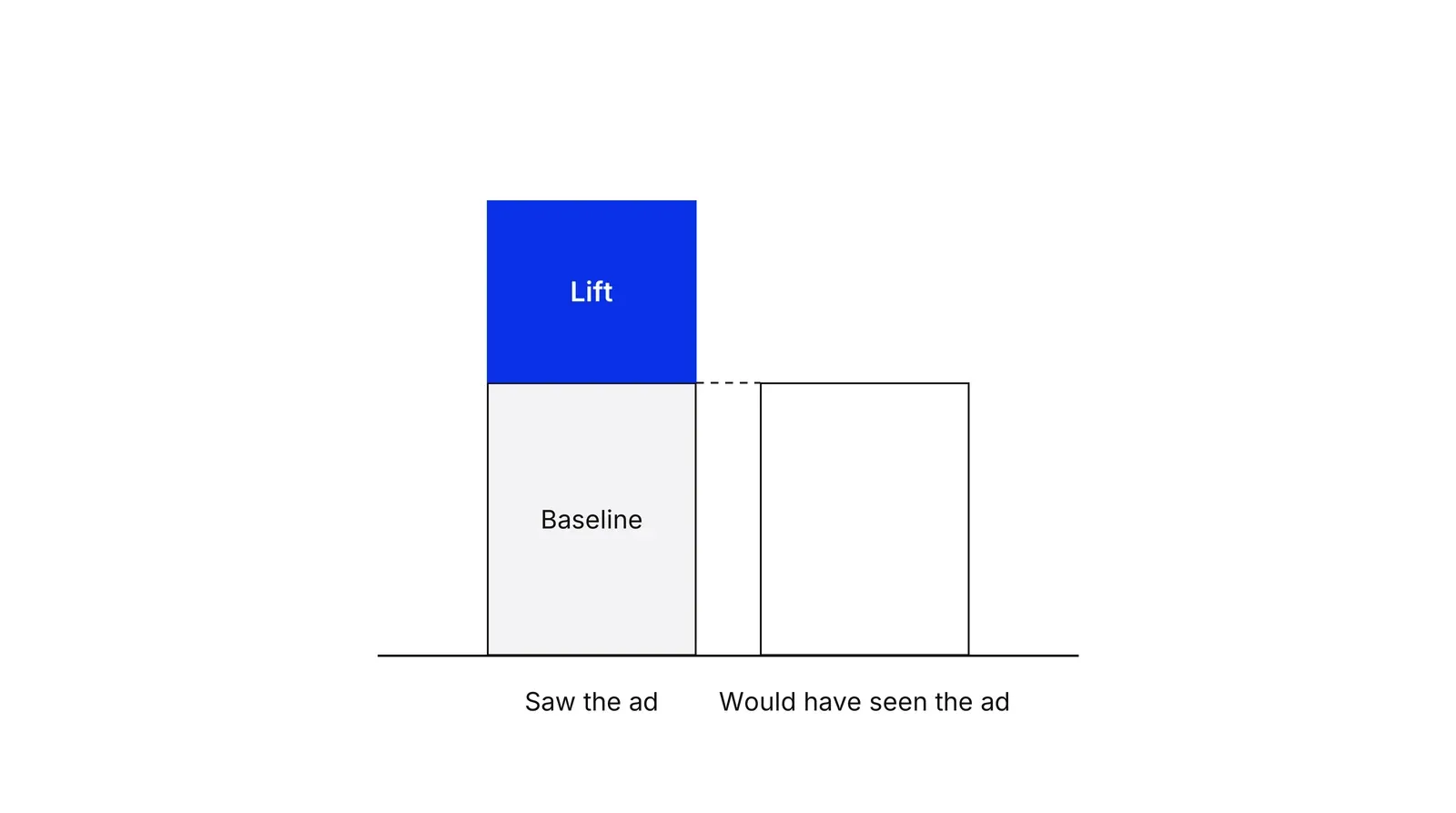
Google offers a version of this as Conversion Lift, though not for every account. A simpler route is to exclude a random 10 to 20 percent of each list yourself and compare the two groups after four weeks.
Frequency and timing
The effect of retargeting fades fast after a visit. Sahni and colleagues found that 33% of the first week’s effect came on the first day, and that the impact fell as time since the first visit grew. That argues for lists split by recency, with higher bids for people who left in the last few days.
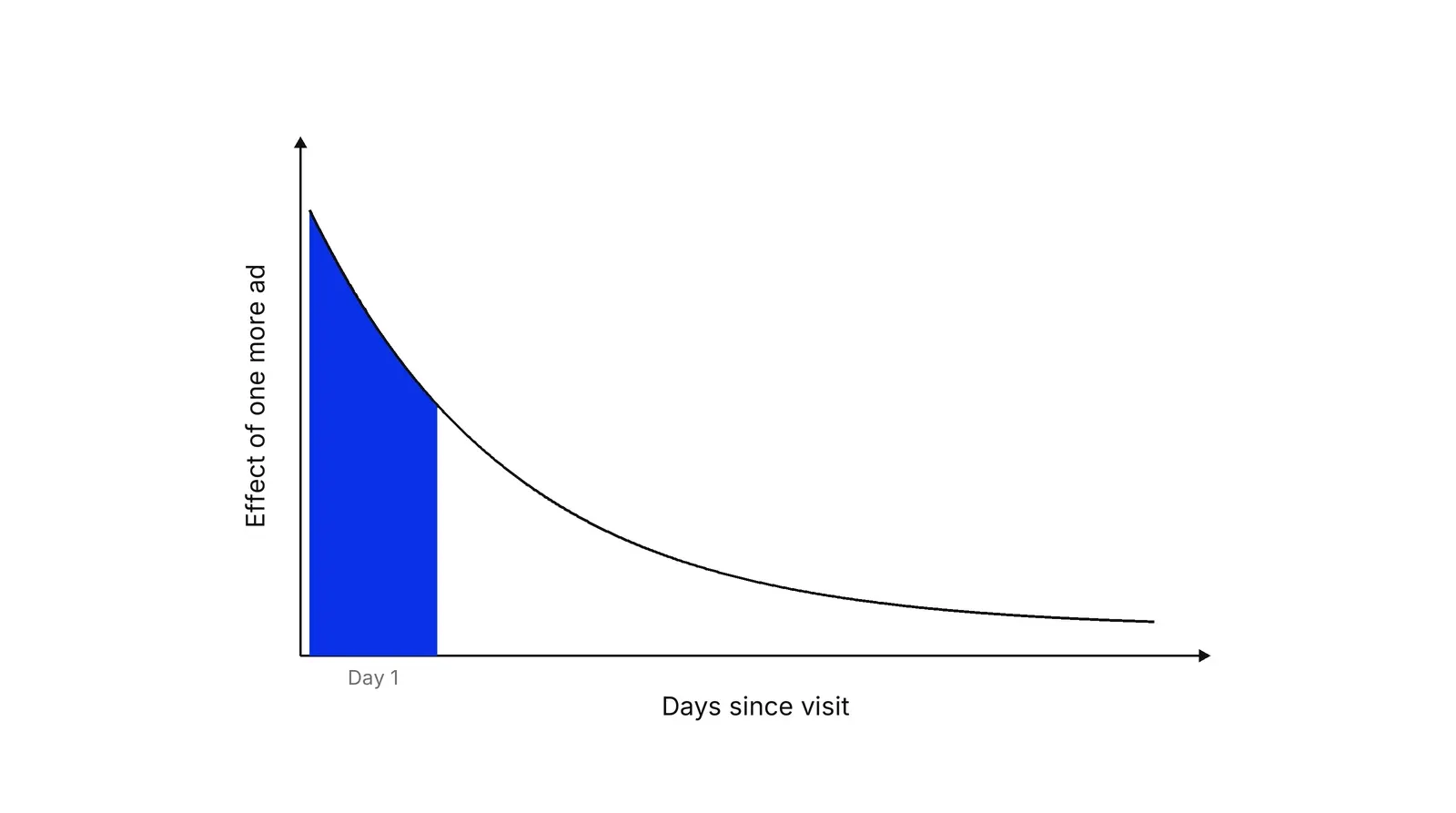
Frequency needs a ceiling too. Google lets you cap impressions per person per day, week or month on Display and Video campaigns. The research does not give one right number. Manchanda and colleagues (2006) found more exposures raised repeat purchase among existing customers, while more distinct creatives had a negative effect. Test your cap the same way you test the campaign.
What privacy changes did to retargeting
Retargeting depends on recognizing the same person across sites and apps, and browsers and phones have made that harder. Safari’s Intelligent Tracking Prevention, launched in 2017, purges tracker cookies for domains a person has not interacted with in 30 days. Since iOS 14.5, apps must ask permission through App Tracking Transparency before tracking people across other companies’ apps and websites.
Aridor and colleagues measured the cost in Management Science: click-through rates on conversion-optimized Meta ads fell 37% after ATT, and firms more dependent on Meta lost 8% to 40% of revenue relative to less exposed firms, with smaller firms hit hardest. Chrome went the other way. In April 2025 Google said it would not roll out a standalone third-party cookie prompt, and in October 2025 it retired Protected Audience, the API Google had built for remarketing without third-party cookies, citing low adoption. First-party lists from logged-in customers and consented emails now carry more of the load.
Healthcare: where retargeting stops
Health is the category where retargeting is most restricted. Google’s personalized advertising policy says audiences an advertiser curates cannot be used when promoting in sensitive categories, and its health rules cover health conditions, chronic-condition treatments, intimate health, invasive procedures including cosmetic procedures and injections, and disabilities. Meta removed health-related detailed targeting options such as “Chemotherapy” in January 2022. Meta also sorts websites into data source categories and can block events such as Lead or Purchase from health sites, as Stape describes; check your category in Events Manager.
The legal risk is real in the US. In 2023 the FTC took action against GoodRx, which had uploaded lists of people who bought heart and blood pressure medication to Facebook to target ads. A federal court in Texas in 2024 vacated part of the HHS guidance on tracking pixels on public hospital pages, but other parts of that guidance and the FTC rules still apply.
For clinics, the workable version is narrow: general brand ads to all site visitors, search ads on treatment queries, and email to patients who consented. The safer plan is to treat retargeting as one measured channel inside the wider marketing funnel, with a holdout group from the first week, the way a Growth Lab test calendar treats any channel.
How to apply Retargeting, step by step
- Map who left and where. List the steps on your site where people drop out: product page, cart, booking form, pricing page. Pull the monthly number of people at each step from analytics. Result: three to five candidate audiences with their size.
- Build lists by intent and recency. Create one list per step and split each by time since the visit, for example 1 to 3 days, 4 to 14 days and 15 to 30 days. Exclude people who already bought, unless you sell something they will buy again. Result: lists sized and named so the bid can follow intent.
- Match the message to the step. Cart abandoners can see the product they left. People who only read a blog post should see a broader brand or category ad, since research shows product-specific ads work best once people have narrowed their choice. Result: one ad set per list with a reason to come back.
- Set caps and windows. Cap impressions per person per day or week, and set list duration close to your sales cycle. A food delivery app and a B2B software vendor should not use the same window. Result: a written frequency cap and membership duration for every list.
- Hold out a control group. Keep 10 to 20 percent of each list out of the campaign, or run the platform's lift study, and compare conversions between exposed and held-out people over four weeks. Result: incremental conversions and cost per incremental conversion, next to the attributed numbers.
- Cut, shift or scale. Drop lists where the holdout converts nearly as well as the exposed group. Move budget to the lists and windows with real lift. Result: a retargeting budget that pays for itself on incremental numbers.
Examples
An online retailer and ghost ads
Garrett Johnson, Randall Lewis and Elmar Nubbemeyer ran a display retargeting campaign for an online retailer using a method they call ghost ads: the platform logs the people in the control group who would have seen the ad, so they can be compared with the people who did. The ads lifted website visits by 17.2% and purchases by 10.5%, according to their 2017 paper in the Journal of Marketing Research. The lift was real, and measurable at a fraction of the cost of older test designs.
A travel site and dynamic ads
Anja Lambrecht and Catherine Tucker tested dynamic retargeting, ads that show the exact hotel a person viewed, against generic brand ads at an online travel firm. On average the dynamic ads were less effective. They stopped underperforming only for people whose browsing suggested they had narrowed their choice, such as visiting review sites. The lesson: product-specific ads suit people close to a decision, not everyone who visited once.
A dental clinic with restricted audiences
Illustrative, no real clinic implied. A clinic gets 3,000 site visits a month, 600 of them to the implants page. Under Google's personalized advertising policy, invasive procedures and treatments for health conditions are sensitive categories, so the clinic should not build an implants-visitor list for Google ads. It retargets all site visitors with a general brand ad about the clinic, runs search ads on implant queries, and follows up by email with patients who gave consent at booking.
When to use it
Use it when a meaningful share of visitors leaves at a step that signals intent, such as a cart, a booking form or a pricing page, and your traffic is large enough for lists above the platform minimum. It fits ecommerce, travel, subscriptions and any purchase people think about for days. It also helps when you can measure lift, either with a holdout or a platform lift study.
When not to use it
Skip it when traffic is so low that lists will not reach the minimum size, when most visitors come back on their own anyway (brand searches, logged-in customers), or when the product sits in a sensitive category such as health conditions, where platform policy bars audiences built from site behaviour. Do not judge it on platform-attributed conversions alone.
Common mistakes
- Judging retargeting on view-through or last-click conversions reported by the platform, which credit the ad for purchases many people would have made anyway.
- Using one 30-day list for everyone, so a person who left a cart an hour ago and one who read a blog post a month ago get the same bid and the same ad.
- Showing the exact product to every visitor, when field experiments find product-specific ads work best for people who have already narrowed their choice.
- No frequency cap and no buyer exclusion, so customers keep seeing ads for things they already bought.
- Building audiences from health condition pages, which breaks Google and Meta policy and in the US has drawn FTC action against GoodRx.
FAQ
What is the difference between retargeting and remarketing?
In paid media the two words now mean the same thing: ads shown to people who already interacted with you. Yandex says so directly in its advertising course, and Google calls the feature remarketing, now labelled your data. Some marketers keep remarketing for email follow-ups to known customers, but platforms do not draw that line.
How do you set up retargeting in Yandex Direct?
Set goals in Yandex Metrica for the steps that matter, such as adding to cart or submitting a form. In Direct, create a retargeting and audience selection condition from those goals, Metrica segments or Yandex Audiences lists, and attach it to a campaign. Yandex also suggests a minus 100% bid adjustment to exclude recent buyers.
Does retargeting actually work?
Randomized field experiments say yes, with smaller effects than platform reports suggest. A retailer study found 10.5% more purchases, and a home-improvement seller saw 14.6% more visitors return within four weeks. Dynamic product ads did worse than generic ads on average in one travel study. Measure your own lift with a holdout group.
How long should a retargeting list keep people?
About as long as your sales cycle. Google defaults to 30 days and allows up to 540. Effects fade quickly: in one experiment a third of the first week's effect came on the first day after the visit. Split lists by recency so recent visitors get higher bids.
Can clinics and pharmacies use retargeting?
Only in narrow ways. Google treats health conditions, treatments and invasive procedures as sensitive categories where audiences built from your own site data cannot be used. Meta removed health-related targeting options in January 2022 and limits events from health websites. General brand ads, search ads and consented email are the safer routes.
Sources
- Anja Lambrecht, Catherine Tucker, When Does Retargeting Work? Information Specificity in Online Advertising, Journal of Marketing Research 50(5), 2013
- Garrett A. Johnson, Randall A. Lewis, Elmar I. Nubbemeyer, Ghost Ads: Improving the Economics of Measuring Online Ad Effectiveness, Journal of Marketing Research 54(6), 2017
- Navdeep S. Sahni, Sridhar Narayanan, Kirthi Kalyanam, An Experimental Investigation of the Effects of Retargeted Advertising: The Role of Frequency and Timing, Journal of Marketing Research 56(3), 2019
- Alexander Bleier, Maik Eisenbeiss, Personalized Online Advertising Effectiveness: The Interplay of What, When, and Where, Marketing Science 34(5), 2015
- Paul R. Hoban, Randolph E. Bucklin, Effects of Internet Display Advertising in the Purchase Funnel, Journal of Marketing Research 52(3), 2015
- Puneet Manchanda, Jean-Pierre Dubé, Khim Yong Goh, Pradeep K. Chintagunta, The Effect of Banner Advertising on Internet Purchasing, Journal of Marketing Research 43(1), 2006
- Randall A. Lewis, Justin M. Rao, The Unfavorable Economics of Measuring the Returns to Advertising, Quarterly Journal of Economics 130(4), 2015
- Thomas Blake, Chris Nosko, Steven Tadelis, Consumer Heterogeneity and Paid Search Effectiveness: A Large-Scale Field Experiment, Econometrica 83(1), 2015
- Brett R. Gordon, Florian Zettelmeyer, Neha Bhargava, Dan Chapsky, A Comparison of Approaches to Advertising Measurement: Evidence from Big Field Experiments at Facebook, Marketing Science 38(2), 2019
- Garrett A. Johnson, Randall A. Lewis, David H. Reiley, When Less Is More: Data and Power in Advertising Experiments, Marketing Science 36(1), 2017
- Guy Aridor, Yeon-Koo Che, Brett Hollenbeck, Maximilian Kaiser, Daniel McCarthy, Evaluating the Impact of Privacy Regulation on E-Commerce Firms: Evidence from Apple's App Tracking Transparency, Management Science 72(8), 2026
- Google Ads Help, About remarketing (your data)
- Google Ads Help, How your data segments work
- Google Ads Help, About frequency capping
- Google Ads Help, About Conversion Lift
- Google Advertising Policies Help, Personalized advertising
- Google Advertising Policies Help, Health in personalized advertising
- Yandex Metrica Help, Goals as retargeting and audience selection conditions in Yandex Direct
- Yandex Advertising, Retargeting (course material)
- Meta for Business, Removing certain ad targeting options and expanding our ad controls, November 2021
- Stape, Meta data sharing restrictions for healthcare, 2026
- Apple Developer, App Tracking Transparency framework
- Apple Developer, User privacy and data use
- John Wilander, WebKit, Intelligent Tracking Prevention, June 2017
- Anthony Chavez, Google Privacy Sandbox, Next steps for Privacy Sandbox and tracking protections in Chrome, April 2025
- Google Privacy Sandbox, Update on plans for Privacy Sandbox technologies, October 2025
- US Federal Trade Commission, FTC enforcement action to bar GoodRx from sharing consumers' sensitive health info for advertising, February 2023
- American Hospital Association, HHS will not appeal AHA court victory in online tracking case, August 2024
Last updated Oct 9, 2026


Marketing agency or growth system: when a company outgrows its agency
An agency is the right call while the founder still runs most of the company. Once the business starts copying itself into new locations or markets, it needs a system that sets goals, tests hypotheses and owns the result.

Why healthcare marketing agencies stall: the short, mid and long wins model we use with clinics
Most agencies own the click and nobody owns the front desk. How we structure clinic work in three horizons, the research behind each one, and one year of results.

Why channel tests stall after month three
Most paid channel tests do not end with a decision. They end when the budget runs out, the attribution model changes, or everyone quietly stops looking at the dashboard.