April Dunford's positioning method (Obviously Awesome)
April Dunford's positioning method is a team exercise from her book Obviously Awesome that finds the market where your product is clearly the best choice, starting from what customers would use instead and ending with the category you sell in.
April Dunford's positioning method is a workshop process from her 2019 book Obviously Awesome. A small cross-functional team starts with what customers would use if the product did not exist, then names what only the product does, the value that creates, the customers who care most and the market category that makes that value obvious. The first edition runs it as 10 steps; the 2026 edition as five.
- Origin
- April Dunford, 2019; revised edition 2026
- Level
- 301 · Advanced
- Fits
- Startup, Scale-up
- Time to apply
- one to two days of prep, a full-day workshop, then four to eight weeks of testing in sales calls
- What you need
- a list of your best-fit customers: the ones who bought fast, stayed and referred others · notes or recordings from recent won and lost deals · one or two people each from sales, marketing, product and customer success, plus the CEO · a facilitator who does not own the current positioning
April Dunford’s positioning method is a team exercise for finding the market in which your product is plainly the best choice for a specific group of buyers. She set it out in Obviously Awesome, published by Page Two on 14 May 2019. Dunford ran marketing and sales at technology startups and, according to Business of Software, has launched 16 products. Her method is used mostly by B2B software companies, product marketers and founders.
She defines positioning as the context buyers use to make sense of a product. In her 2021 quickstart guide she writes that “positioning is not equivalent to messaging”. It comes first, and the tagline, website and sales deck are written from it.
Five components, decided in a fixed order
The method rests on five components: competitive alternatives, unique attributes, the value those attributes deliver, the customers who care most about that value, and the market category. The book adds relevant trends as an optional sixth. Our page on the positioning statement covers why Dunford rejects the fill-in-the-blanks template; this page covers how her process runs.
Order matters because each answer depends on the one before. You cannot say what is unique until you know what you are compared with. You cannot pick a category until you know who cares about your value. Dunford’s 2024 post on the job of a market category calls choosing the category first “the tail wagging the dog”.
The 10 steps of the first edition
The 2019 edition turns the five components into 10 steps. The step names below follow Commoncog’s summary and the book excerpts quoted by Userlist, which match each other.
| Step | What the team does | Output |
|---|---|---|
| 1. Understand the customers who love your product | Pick the customers who bought fast and stayed | A best-fit customer list |
| 2. Form a positioning team | Bring in one or two people per function | A group of about nine or fewer |
| 3. Align vocabulary, let go of baggage | Agree what the terms mean, drop old assumptions | A shared starting point |
| 4. List true competitive alternatives | Ask what customers would do without you | Grouped alternatives |
| 5. Isolate unique attributes | List what you have that alternatives lack | Capabilities with proof |
| 6. Map attributes to value themes | Ask so what for each attribute | Two or three value themes |
| 7. Determine who cares a lot | Find the traits of customers who value those themes | A target segment |
| 8. Find a market frame of reference | Choose the category and the style of positioning | A category and a style |
| 9. Layer on a trend, carefully | Link to a trend only if the link is real | Optional trend |
| 10. Capture the positioning | Write it on one page | A shareable document |
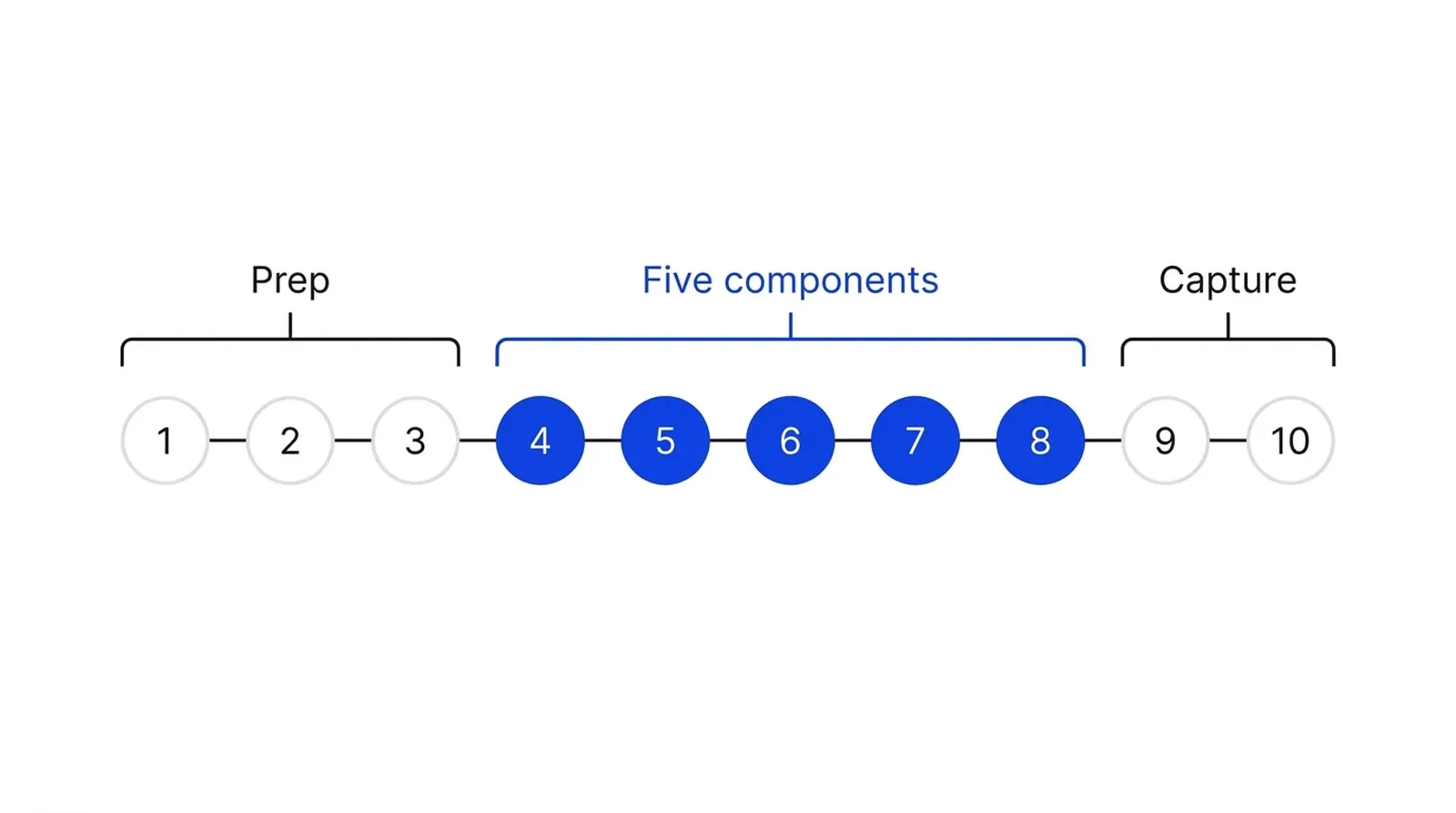
Steps 4 to 8 map one to one onto the five components. Steps 1 to 3 prepare the room, and steps 9 and 10 finish the work. That grouping is what Dunford made explicit in the revised edition.
Who sits in the workshop
The book asks for one or two people from each function, including sales, marketing, product and customer success, with the group kept to about nine people, as Commoncog summarises it. A facilitator keeps everyone heard. Dunford’s argument for an outsider in that seat is that insiders rarely challenge long-held assumptions about the product.
Sales matters most at step 4. In her 2026 Lenny’s Newsletter guide, Dunford calls disagreement about competitors “the root of most weak positioning”. Marketing overweights visible rivals, product watches future ones, and founders carry outdated views. Experienced account executives hear what buyers actually compare. That guide also puts the share of B2B deals lost to the status quo at about half, citing Matt Dixon’s research, which Dixon describes as 40% to 60% of qualified opportunities lost to customer indecision.
Choosing the market frame
Step 8 is where the method differs most from older positioning tools. The book offers three styles, as listed by Commoncog and used by Userlist.
| Style | What you claim | Works when | Risk |
|---|---|---|---|
| Head to head | You are the best choice in an existing category | You already lead, or buyers see you as a real alternative to the leader | You fight the leader on its terms |
| Big fish, small pond | You are the best choice for one subsegment the leader serves badly | A group has needs the leader ignores | The subsegment may be too small |
| Create a new game | A new category in which you lead | No existing category fits your value | Buyers must first learn the category exists |
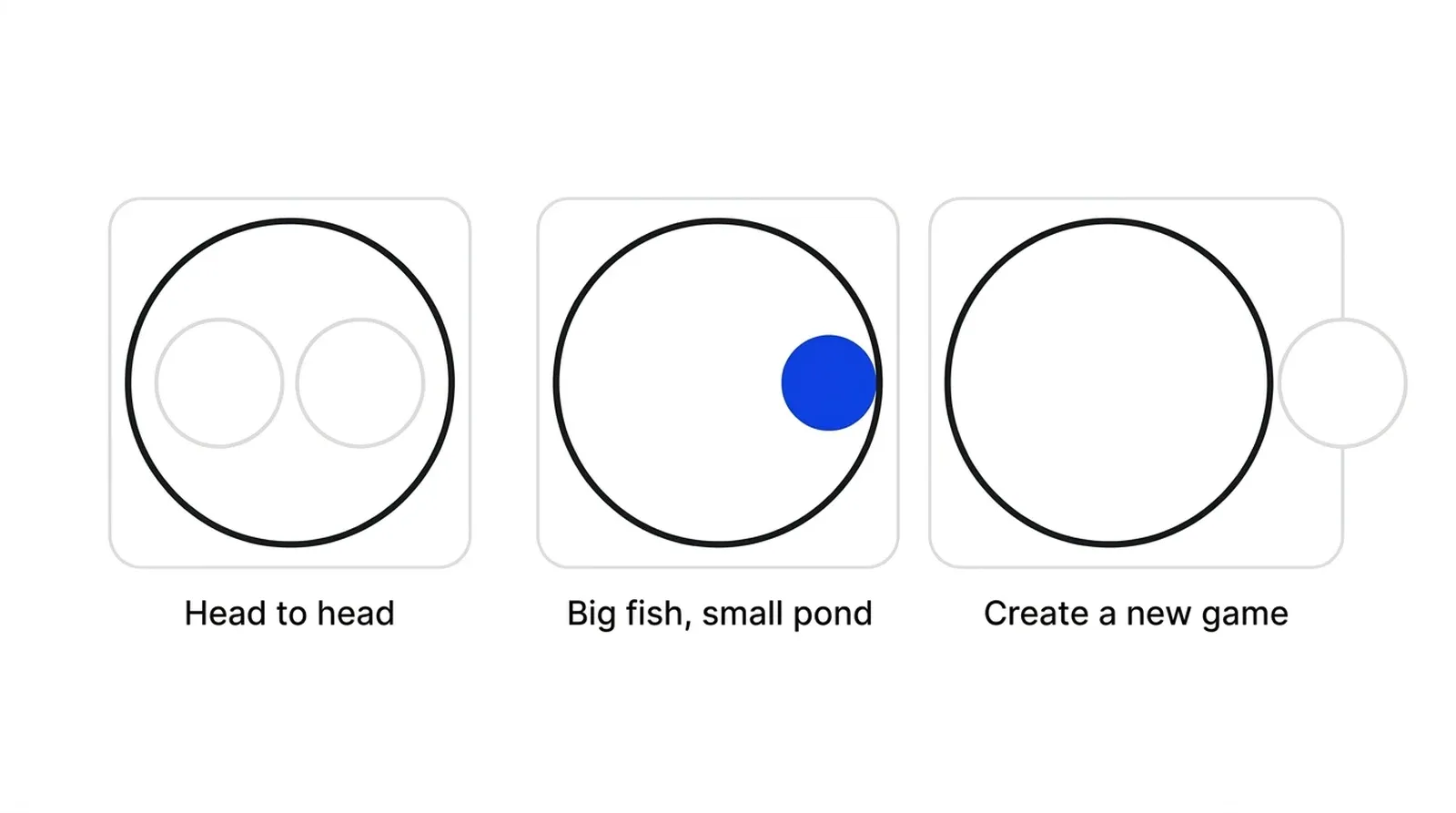
Dunford’s later writing favours the middle option. The 2024 market category post says most well-known tech products, Salesforce and the iPhone among them, started in an underserved subsegment of an existing market. She estimates that only about 10% of her clients need a new category. That puts her at odds with Play Bigger (2016), whose authors argue that companies win by designing new categories.
The big fish idea is close to the beachhead segment in Geoffrey Moore’s Crossing the Chasm. It also echoes Kellogg’s “frame of reference”, which Keller, Sternthal and Tybout said managers often neglect.
Dunford’s own clearest case is Janna Systems, a Toronto CRM company. In her quickstart guide she describes it moving from enterprise CRM, where it was a weaker Siebel, to CRM for investment banks. Computerworld reported in September 2000 that Siebel agreed to buy Janna for $975 million in stock, with Merrill Lynch and Lehman Brothers among its users. Dunford’s revenue figures for Janna do not match the $13 million of 1999 sales the press reported, so we leave them out.
What changed in the 2026 edition
The revised edition went on sale in February 2026, according to Dunford’s subscriber post. Her January announcement says it has “five components and five steps”. Preparation became a separate section, covering decisions such as what is being positioned and for which buyer. The value step was expanded because teams got stuck there, and the section on what happens after the exercise grew. Readers of the first edition can keep using the 10 steps; the substance is the same.
From positioning to the sales pitch
Dunford’s second book, Sales Pitch (2023), exists because positioning often stops in marketing. In a 2024 post she lists the usual reasons: sales does not believe the positioning, or marketing builds a deck sales cannot use. Her pitch structure opens with a setup on alternatives and a perfect world, then gives differentiated value with proof, an optional step for objections, and an ask for the next step. Show notes for her podcast appearances number the eight steps differently, so check the book before quoting the numbering.
The pitch is also the test. In Pushers’ Growth Lab work, new positioning goes into live sales calls before it goes onto the website, because buyers’ questions show quickly whether the category and the value themes hold.
How to apply April Dunford's positioning method (Obviously Awesome), step by step
- Agree the scope before anyone meets. Decide what is being positioned (a product, a suite or the company), for which buyer, and whether the product is live or pre-launch. Pre-launch work is a thesis to test, not a final answer. Result: a one-paragraph brief that the CEO signs off.
- List your best-fit customers. Pull 10 to 20 customers who closed quickly, understood the value without coaching, did not churn and referred others. Ignore logos you are proud of but that struggled. Result: a named list that every later step refers back to.
- Name the real alternatives. For those customers, ask what they would do if your product disappeared: a named rival, a spreadsheet, an agency, a hire, or nothing. Sales and customer success usually know this best. Result: three to five alternatives, grouped, with doing nothing listed when it applies.
- Turn differences into value themes. List every capability you have that the alternatives lack, then ask so what for each one until you reach something a customer would measure. Group the answers. Result: two or three value themes, each backed by proof such as a customer quote or a number.
- Pick who cares most and the market frame. Describe the traits that make a customer care a lot about those themes, then test categories against that group. Decide whether to fight the leader head to head, win a subsegment or create a new category. Result: a target segment and a category, written down.
- Capture it and test it in sales. Write the decisions on one page, build the first-call sales story from it, and run it in real deals for four to eight weeks. Change the wording, not the decisions, unless deals show the decisions are wrong. Result: a tested positioning document that sales and marketing both use.
Examples
Userlist moves from email automation to customer messaging
Userlist, a SaaS messaging tool, ran the 10 steps from the book during 2019 with a three-person team and no outside facilitator. Its alternatives were manual follow-up, an in-house build, general email tools and dedicated messaging tools such as Intercom. The team chose a big fish, small pond frame: customer messaging for SaaS teams that want something less complex than Intercom. Co-founder Jane Portman reports that prospects understood the product faster after the homepage changed. The company later moved back toward email automation for SaaS as the product grew.
A clinic booking platform
Illustrative, no real company implied. A booking platform for private clinics is losing deals to large practice-management suites. Its best customers turn out to be three-chair dental practices that use the suite only for scheduling and hate its setup time. The team drops the practice-management frame, where it lacks billing and records, and positions as online booking for small dental practices, live in one afternoon. Sales stops being asked about features the product never planned to build.
A payouts API for marketplaces
Illustrative, no real company implied. A fintech sells a payouts API and has been pitching against two global payment processors. Lost-deal notes show that most prospects actually choose to keep paying sellers by manual bank transfer. The team lists manual transfers as the main alternative, makes reconciliation time the value theme, and targets marketplaces with more than 500 sellers, where manual payouts break first.
When to use it
Use it when sales cycles are long because prospects cannot tell what the product is, when you lose deals to the status quo more than to rivals, after a pivot, an acquisition or a new product line, and before a funding round or sales kickoff that will lock in the story for a year. It suits B2B and complex products sold through conversations.
When not to use it
Skip it before you have a handful of happy customers, since the method starts from them. It also adds little for simple consumer goods bought on impulse, where brand and distribution matter more than a reasoned comparison, and it cannot fix a product that has no real difference from the alternatives.
Common mistakes
- Starting with the market category because a new category sounds exciting, then bending the rest of the answers to fit it.
- Listing competitors from analyst reports instead of the alternatives buyers actually consider, including doing nothing.
- Stopping at features. A feature becomes value only when you can say what the customer gains and how they would notice.
- Running the workshop without sales, so the result never reaches the first sales call.
- Adding a trend because it is popular, when there is no clear link between the trend and what the product does.
FAQ
What are the 10 steps in Obviously Awesome?
Understand your best customers, form a positioning team, align vocabulary and drop old assumptions, list true competitive alternatives, isolate unique attributes, map them to value themes, determine who cares a lot, find a market frame of reference, layer on a trend with care, and capture the positioning so it can be shared.
What are April Dunford's five components of positioning?
Competitive alternatives, unique attributes, value and proof, target market characteristics, and market category. The book adds relevant trends as an optional sixth piece, which Dunford calls risky. She insists on working through them in that order, starting with the alternatives, because each component depends on the one before it.
What is the difference between head to head and big fish, small pond?
Head to head means competing for an existing category against its leader by claiming to be the best choice for most buyers. Big fish, small pond means taking a subsegment of that category whose needs the leader serves badly, winning it, then expanding. Dunford's later writing says most well-known tech products started the second way.
What changed in the 2026 edition of Obviously Awesome?
Dunford's announcement says the revised edition keeps the five components but cuts the process from 10 steps to five, one per component. Preparation and the work after the exercise are separate sections, with more on turning positioning into a sales pitch, a new chapter on value, and material for large and multiproduct companies.
How is Sales Pitch related to Obviously Awesome?
Sales Pitch, the 2023 book, is the companion book. Obviously Awesome produces the positioning; Sales Pitch turns it into a story a seller tells on the first call. Dunford built it because positioning often stalls in marketing and never changes what sales says to buyers.
Sources
- April Dunford, A Quickstart Guide to Positioning, March 2021
- April Dunford, Books: Obviously Awesome and Sales Pitch
- Page Two, Obviously Awesome by April Dunford, 2019
- Cedric Chin, Commoncog, Obviously Awesome book summary
- Jane Portman, Userlist, How we used April Dunford's 10-step method to overhaul positioning, 2022, updated 2025
- April Dunford, Announcement: Obviously Awesome, the new updated and expanded edition, January 2026
- April Dunford, New book available (early announcement for subscribers), February 2026
- April Dunford, Positioning Prep Part 1: Decisions to Make Before a Positioning Exercise, January 2026
- April Dunford, Understanding the Job of a Market Category, January 2024
- April Dunford, A Buyer-Centric Approach to Competitive Positioning, November 2023
- April Dunford, How to Turn a Competitor's Strength into a Weakness, December 2024
- April Dunford, When To Revisit Your Positioning, September 2024
- April Dunford, Why Positioning Fails to Make the Jump from Marketing to Sales, February 2024
- April Dunford, Sales-First Storytelling, November 2023
- April Dunford, A guide to advanced B2B positioning, Lenny's Newsletter, March 2026
- Lenny's Podcast, A step-by-step guide to crafting a sales pitch, with April Dunford, October 2023
- Lenny's Podcast, Close more deals, with Matt Dixon (The JOLT Effect), May 2024
- Mind the Product, Obviously Awesome: positioning your product, April Dunford on The Product Experience, September 2020
- Business of Software, April Dunford, Positioning Jujitsu, BoS Conf Online Europe 2020
- Business of Software, April Dunford, The Hard Parts of Positioning
- Computerworld, Siebel gobbles up another CRM software rival, September 2000
- Kevin Lane Keller, Brian Sternthal and Alice M. Tybout, Three Questions You Need to Ask About Your Brand, Harvard Business Review, September 2002
- Geoffrey A. Moore, Crossing the Chasm, HarperBusiness, 1991, Internet Archive record
- Porchlight Books, Play Bigger by Al Ramadan, Dave Peterson and Christopher Lochhead, Harper Business, 2016
Last updated Oct 9, 2026


Marketing agency or growth system: when a company outgrows its agency
An agency is the right call while the founder still runs most of the company. Once the business starts copying itself into new locations or markets, it needs a system that sets goals, tests hypotheses and owns the result.

Why healthcare marketing agencies stall: the short, mid and long wins model we use with clinics
Most agencies own the click and nobody owns the front desk. How we structure clinic work in three horizons, the research behind each one, and one year of results.

The compliance layer under fintech marketing operations
A fintech marketing agency can build campaigns. It cannot own the compliance review, the KYC drop-off or the multi-market licensing rules that decide whether a lead ever becomes a customer.